
Sandy soils that erode
Concord Heights and other sandy areas drain well, but stripped sand washes and blows once roots and ground cover are gone. Clearing should be staged so the area is stabilized soon after, especially near slopes or drainage.
House lots, commercial sites and rural acreage cleared with an eye on sandy soils, river shoreland and city wetland buffers.
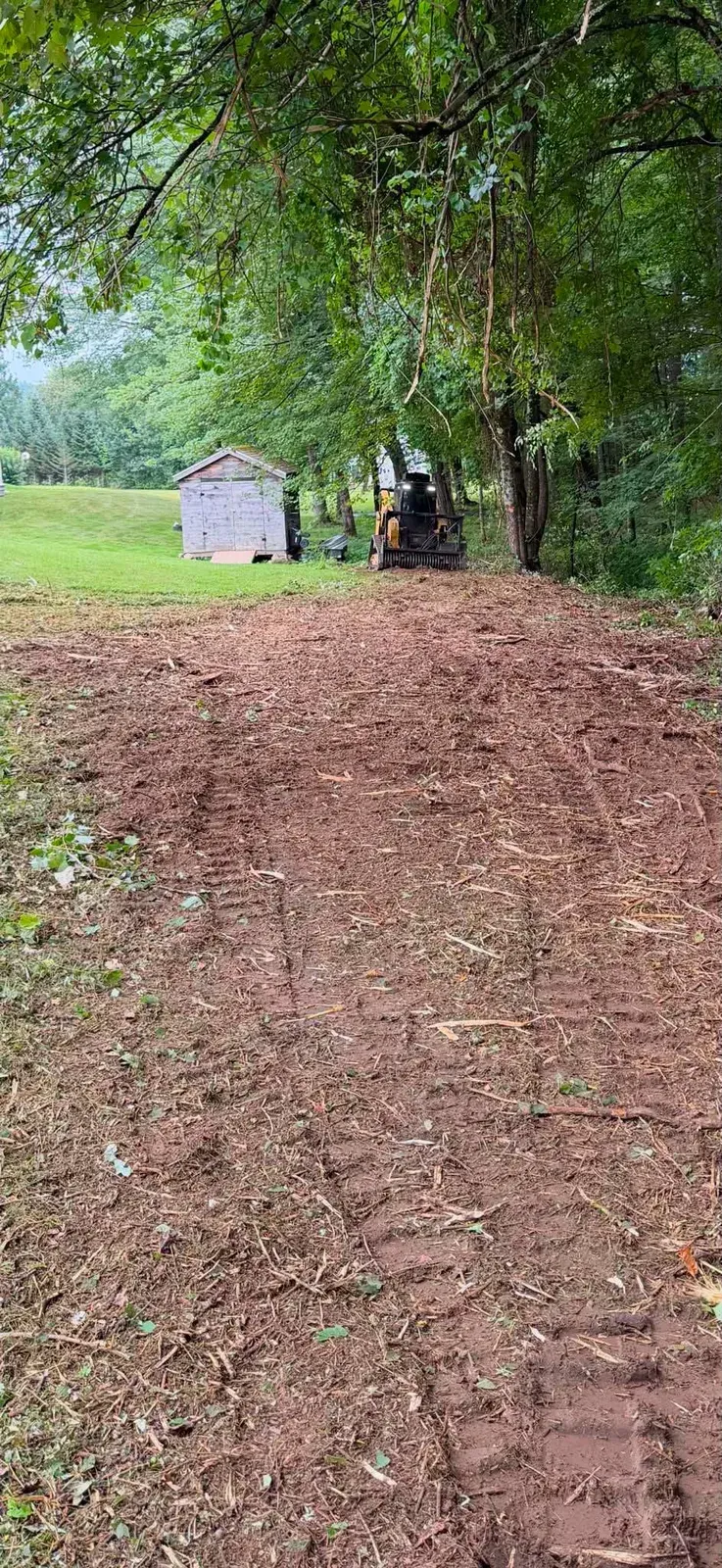
We clear land in Concord for homeowners expanding a yard or adding a driveway, builders preparing house lots, commercial owners readying a site, and landowners opening wooded acreage in the city's rural sections. Track loaders, a mini excavator, a grapple and stump grinders let us cut, pull, grind and stage debris, and our trucks and trailers haul off what can't stay.
Call (603) 438-6492 or use Get a Quote with the address, rough acreage and your plans. More on our land clearing page.
Concord is large, with city lots, sandy plains and wooded hills inside its limits. Each one changes how clearing is planned.
Concord Heights and other sandy areas drain well, but stripped sand washes and blows once roots and ground cover are gone. Clearing should be staged so the area is stabilized soon after, especially near slopes or drainage.
Concord's zoning sets wetland buffers of at least 50 feet. Removing vegetation, regrading or adding pavement inside a buffer generally needs a Planning Board conditional use permit, which requires showing the disturbance is necessary and minimized.
Within 250 feet of the Merrimack, the lower Contoocook or Penacook Lake, part of the 50 to 150 foot woodland buffer must stay natural, and the state terrain permit threshold drops to 50,000 square feet.
The city's outer villages and hills hold larger wooded parcels, some with saleable timber. Cutting timber means filing a Notice of Intent to Cut with the city's assessing officials before work starts.
City wetland buffer. Concord establishes wetland buffers with a minimum width of 50 feet. Removal of vegetation, regrading or new impervious surface in a buffer generally requires a conditional use permit from the Planning Board (City of Concord Zoning Ordinance, Section 28-4-3 (opens in a new tab)).
Alteration of Terrain. NHDES requires a permit when a project disturbs more than 100,000 square feet, or 50,000 square feet if any disturbance is in protected shoreland, or when it disturbs a 25 percent or steeper slope within 50 feet of surface water (NHDES (opens in a new tab); RSA 485-A:17 (opens in a new tab)).
Wetlands. Excavating, removing or filling in a bank, marsh, swamp or surface water requires a state wetlands permit (RSA 482-A:3 (opens in a new tab)).
Intent to Cut. Before cutting timber, the owner files a Notice of Intent to Cut with the city's assessing officials (RSA 79:10 (opens in a new tab)).
Scenic roads. On a designated scenic road, cutting trees of 15 inches or more in circumference within the road, or removing stone walls, needs Planning Board consent (RSA 231:158 (opens in a new tab)).
This is general guidance, not legal advice. We help you spot when a permit question exists so you can confirm it with the town or NHDES before work starts.
Sources: City of Concord: Zoning Ordinance Section 28-4-3, wetland buffers (2025 amendment text); NHDES: Alteration of Terrain permitting; NH RSA 485-A:17, terrain alteration; NH RSA 482-A:3, wetlands permit requirement; NH RSA 79:10, notice of intent to cut; NH RSA 231:158, scenic roads
Land clearing is quoted per site, so we don't publish set prices. For planning, HomeGuide puts land clearing at about $1,200 to $2,500 per acre for light clearing of brush and small trees and $4,500 to $8,000 per acre for heavy clearing of dense woods with large trees (HomeGuide (opens in a new tab)). Angi reports a typical range of roughly $1,397 to $6,176 per acre (Angi (opens in a new tab)). These are national reference ranges, not our prices, and stump removal, hauling and grading in Concord can add to them.
If your project is mostly brush and small trees that can be mulched in place, our forestry mulching cost calculator gives a planning estimate. For everything else, call (603) 438-6492 or request a quote.
Cost references: HomeGuide: Land Clearing Cost; Angi: How Much Does It Cost to Clear Land?
A few places locals know, and what they mean for outdoor work nearby.
The largest lake in Concord and the city's main water source, in the western part of the city. Land within 250 feet of its shore is protected shoreland under state law.
Get directions to Penacook Lake (opens Google Maps in a new tab)A flat, sandy plain on a 100-foot bluff east of the Merrimack, where most of the city's commercial development since 1960 has gone. Sandy ground drains fast but erodes easily once vegetation and roots are stripped.
Get directions to Concord Heights (opens Google Maps in a new tab)Concord's highest ground, 860 feet above sea level, just west of the summit in neighboring Loudon. Wooded hillside lots in this area need planning for slopes and equipment access.
Get directions to Oak Hill (opens Google Maps in a new tab)The Contoocook joins the Merrimack at the village of Penacook. Its last stretch, from the Riverhill bridge to the Merrimack, is a state-designated river, so riverside lots fall under shoreland rules.
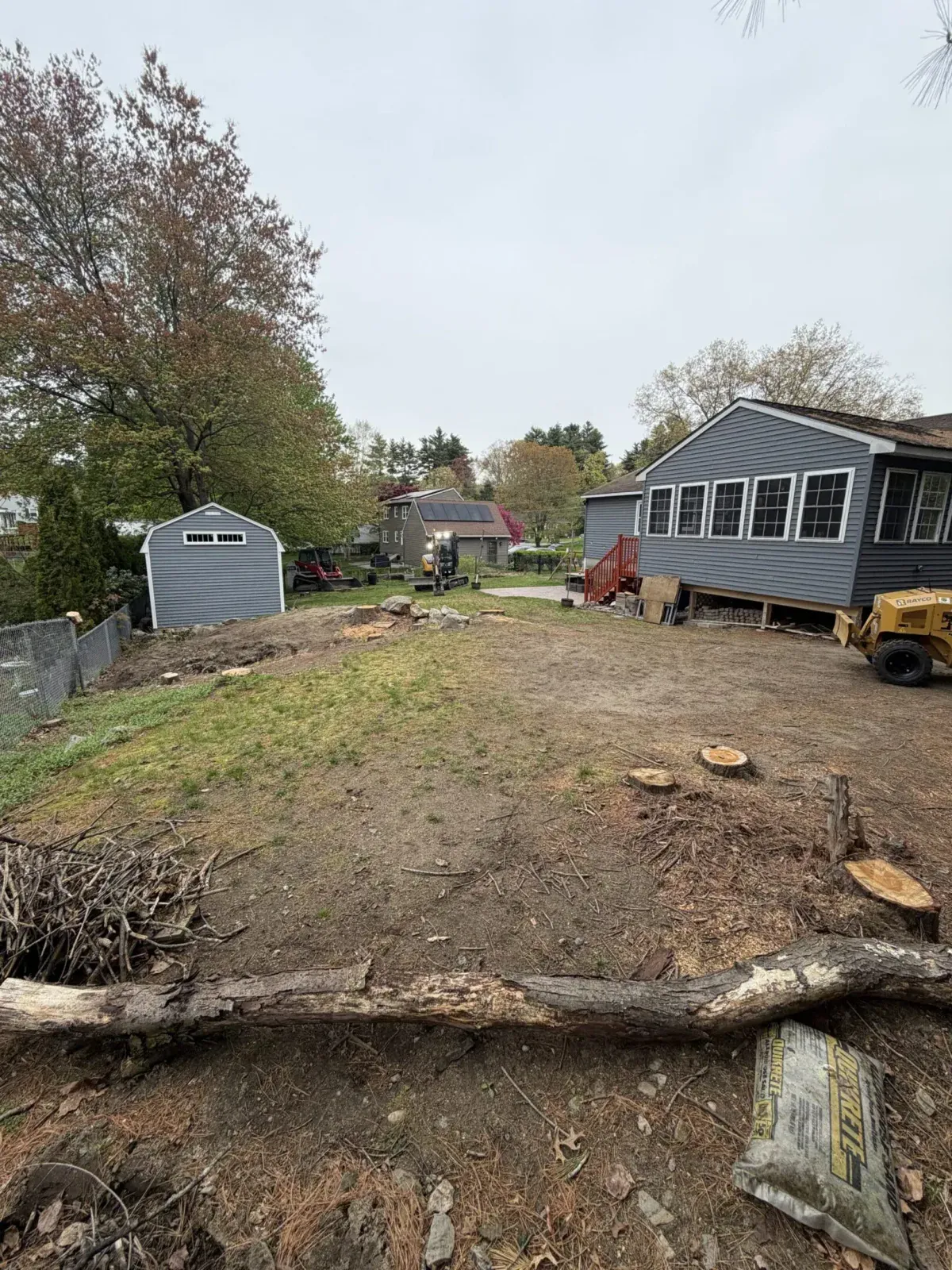
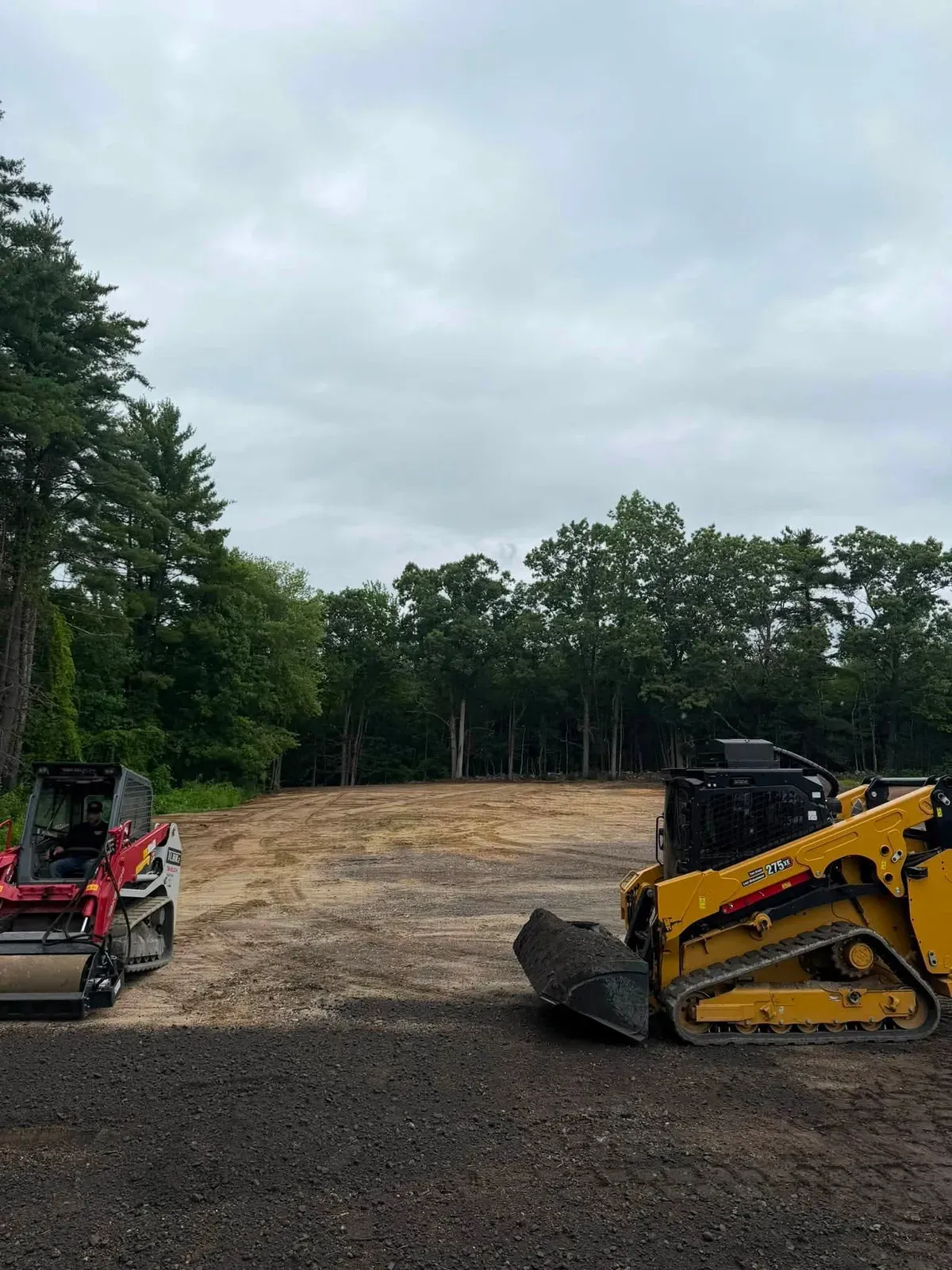
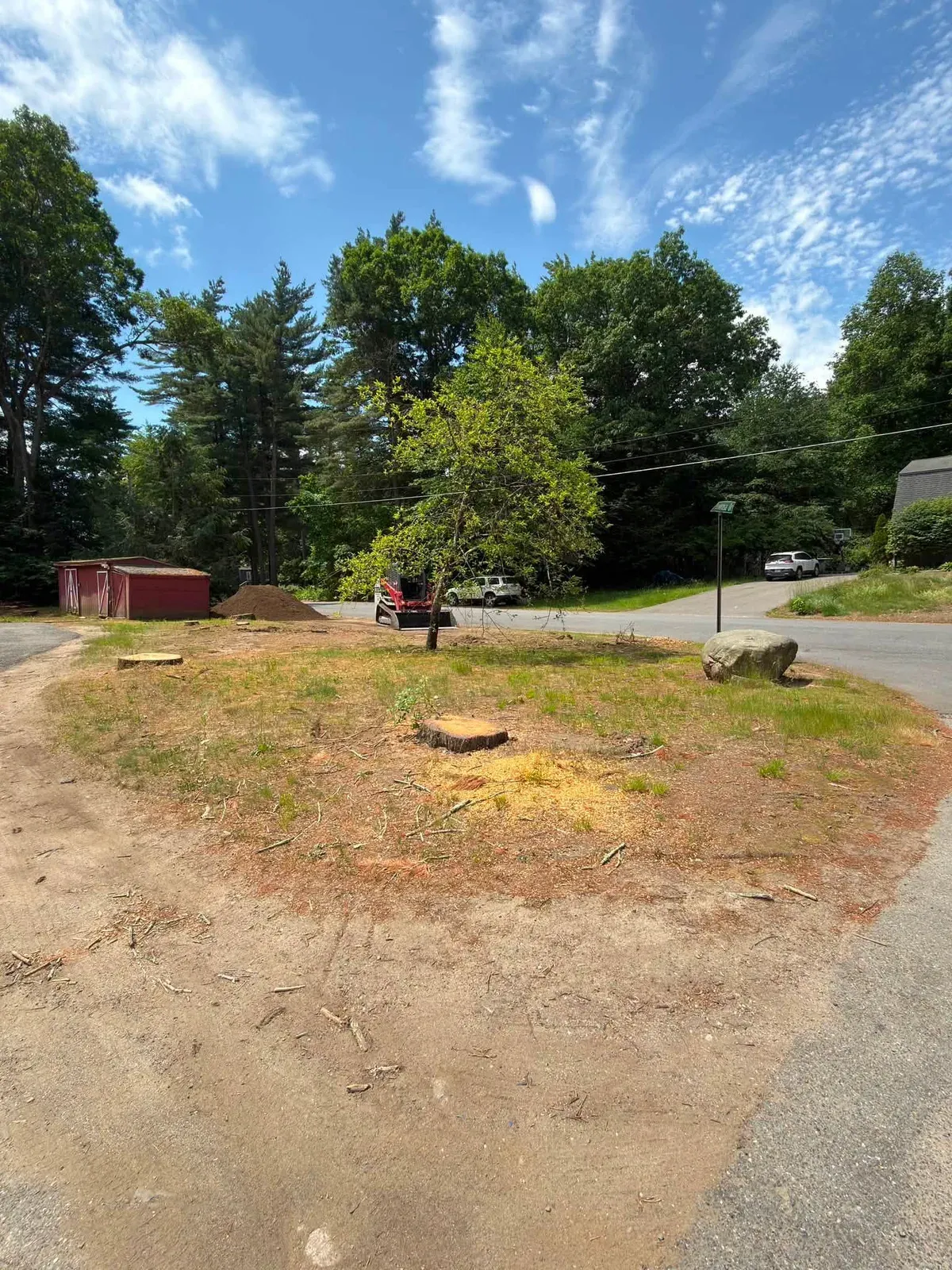
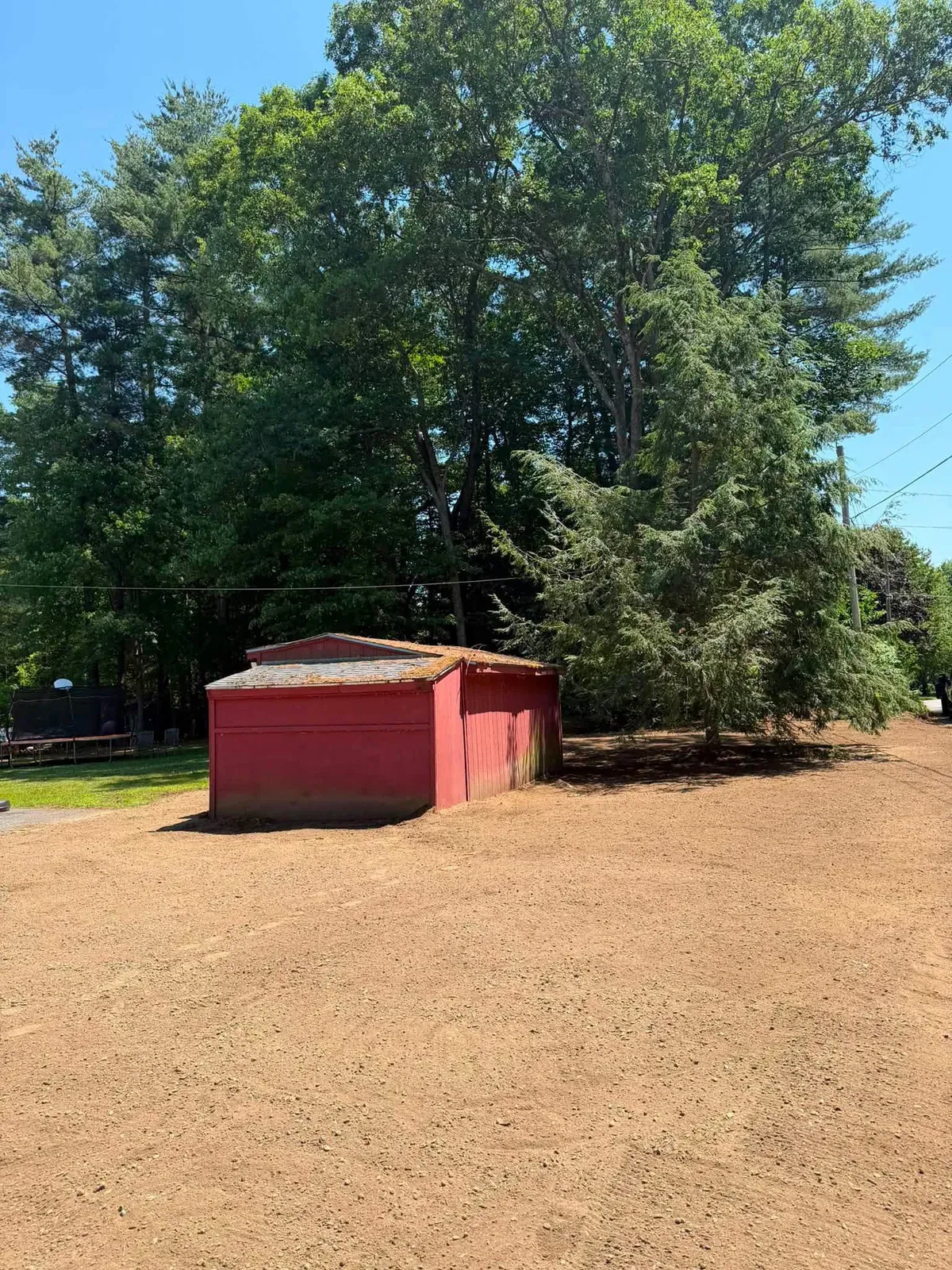
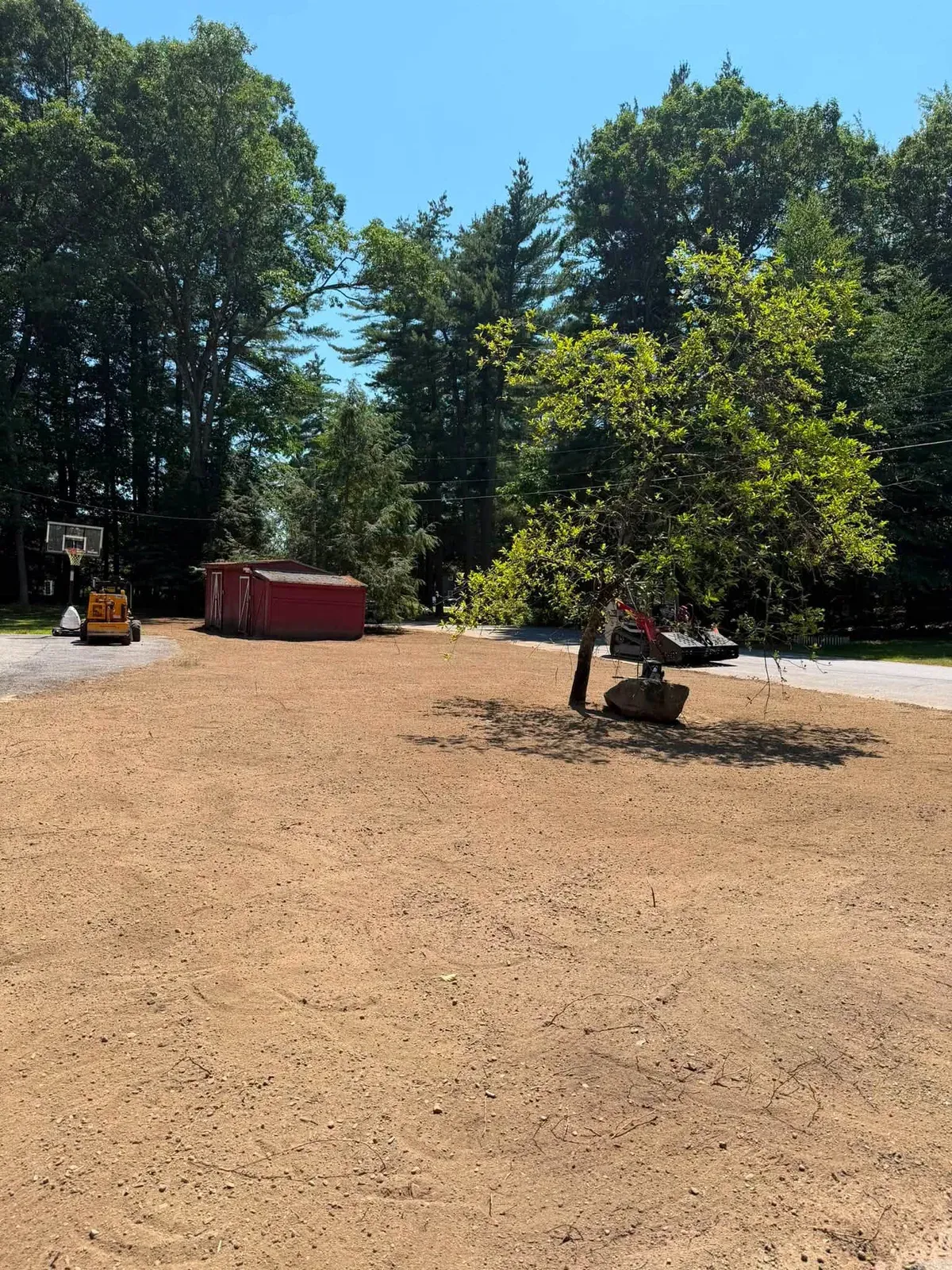
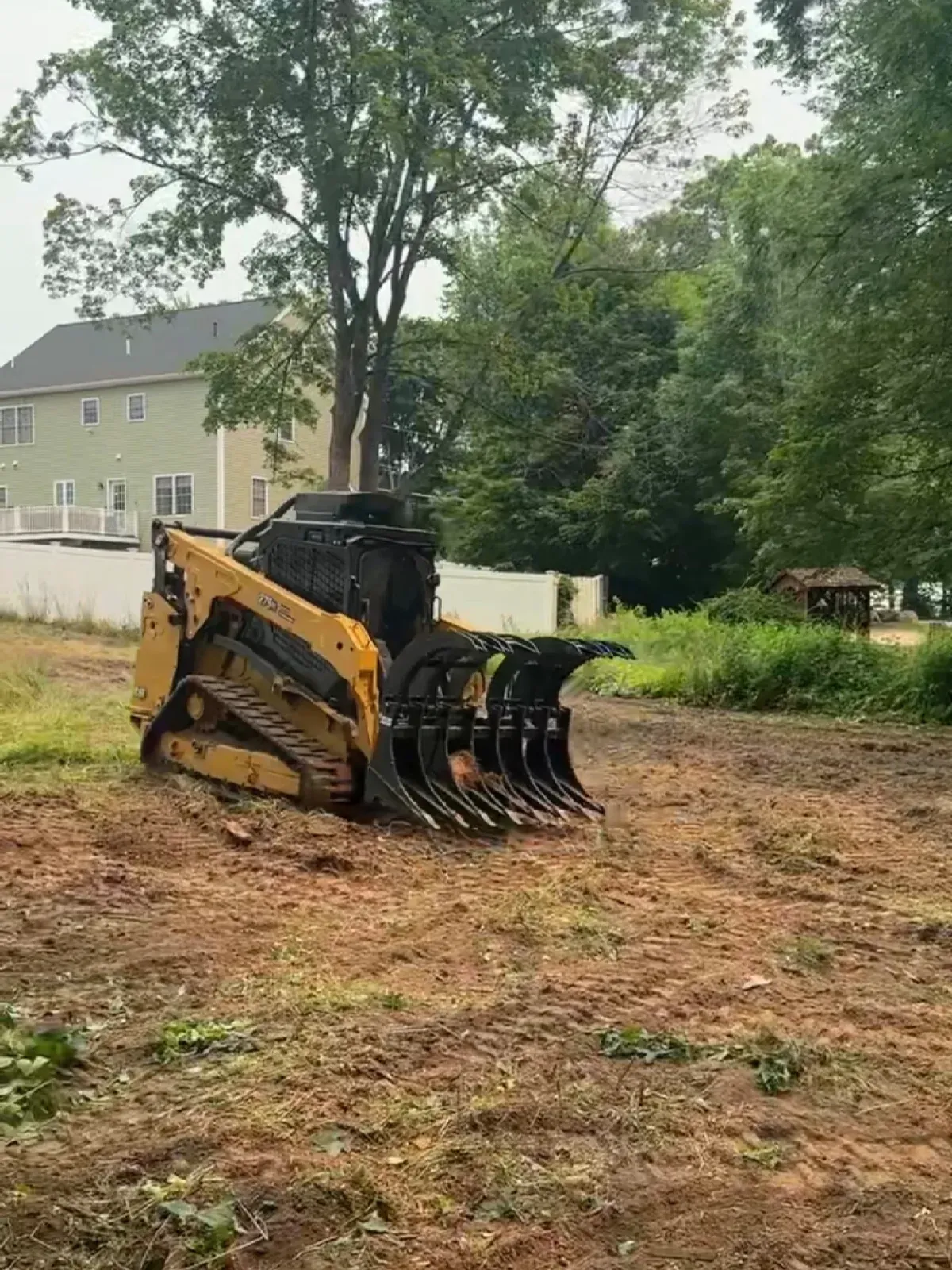
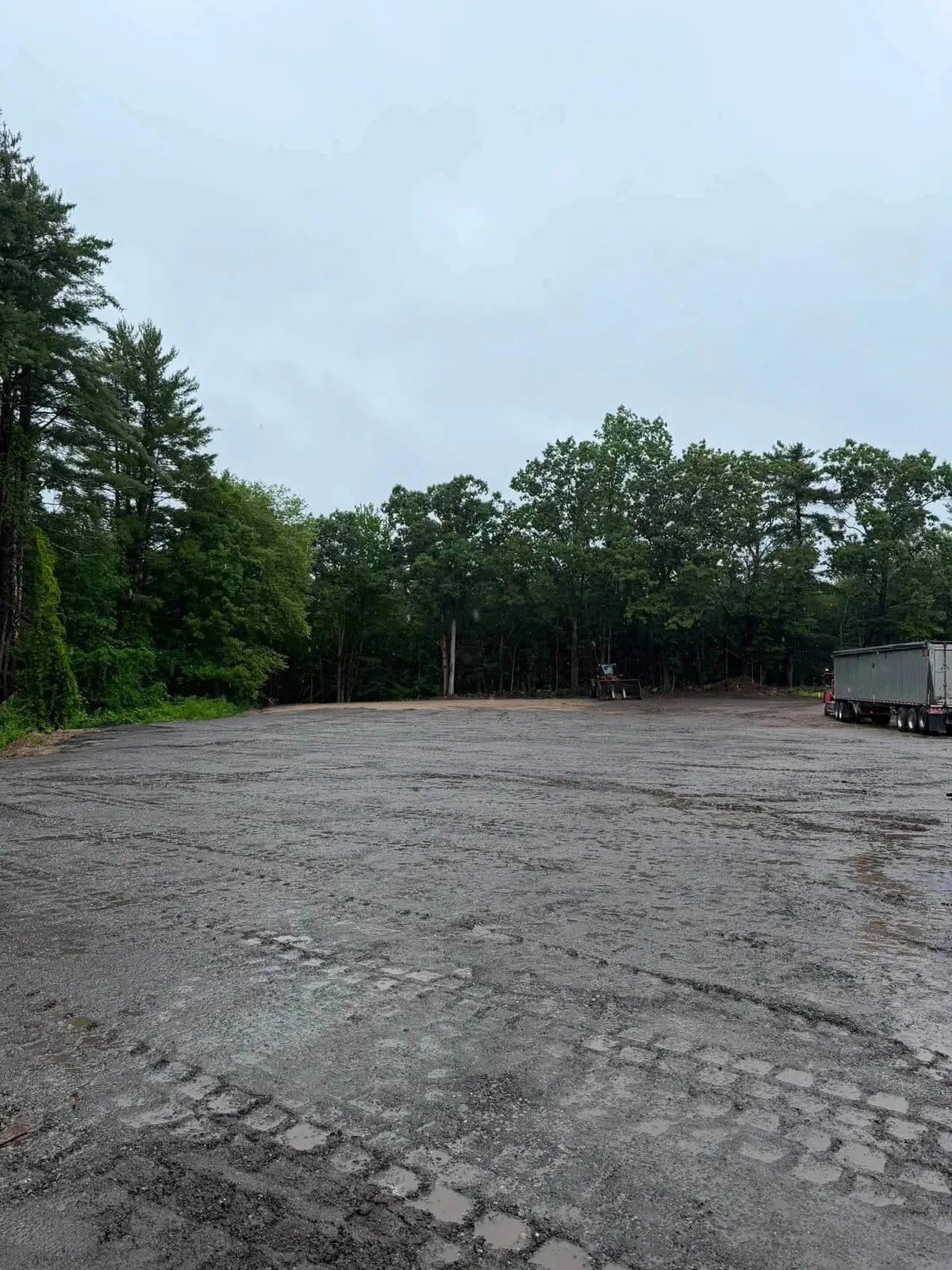
Get directions to Contoocook River at Penacook (opens Google Maps in a new tab)Photos from our crew's jobs across New Hampshire and Massachusetts.
Small clearing away from wetlands and water often needs none. Work in a city wetland buffer usually needs a conditional use permit, and projects over 100,000 square feet, or 50,000 near protected shoreland, need a state Alteration of Terrain permit. Ask the city's planning division before you start.
Yes. Track loaders, a grapple and a forestry mulcher head let us handle wooded parcels and overgrown fields. If timber will be sold or cut, the owner files a Notice of Intent to Cut with the city first.
We clear in stages and leave roots in the ground outside the work area until it is ready to stabilize. Your builder or engineer sets the erosion controls, and we can rough grade so they go in quickly.
Where a foundation, driveway or septic area will go, stumps usually come out with the mini excavator. Elsewhere they can be ground in place, which disturbs less soil.
If you only need brush and small trees gone and are not building, mulching is often cheaper and leaves the soil covered. See forestry mulching in Concord.
See every town we cover on our service areas page.
Tell us about the job and we will call you back to talk it through. Fields marked * are required.