
Fields and woods roads on rural parcels
Larger parcels in the outer parts of the city can include old fields and woods roads that fill in with saplings. A mulcher reopens them and leaves a surface you can walk, mow or seed.
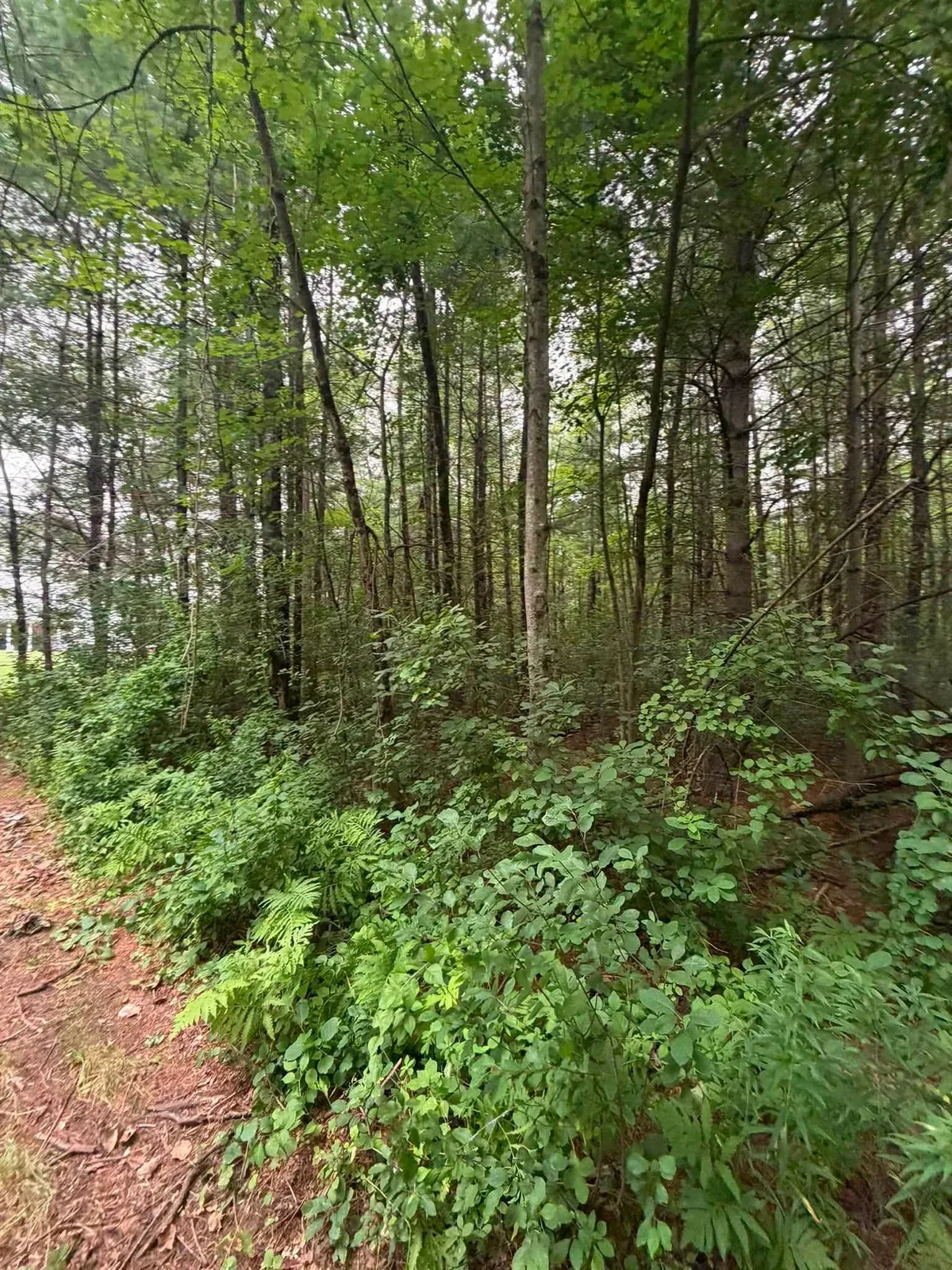
Overgrown fields, woods roads and invasive brush mulched in place, with soil and roots left to hold the ground.
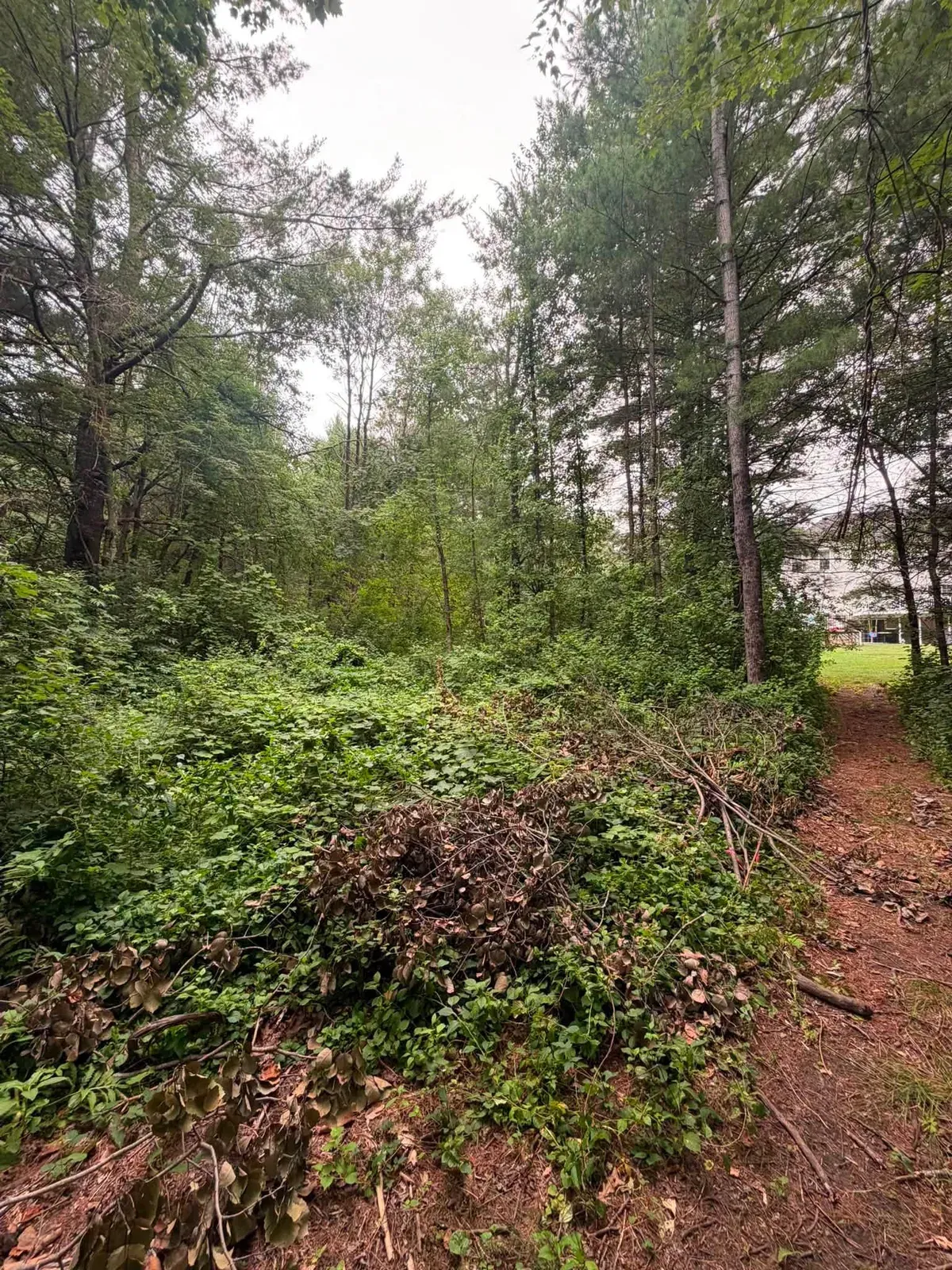
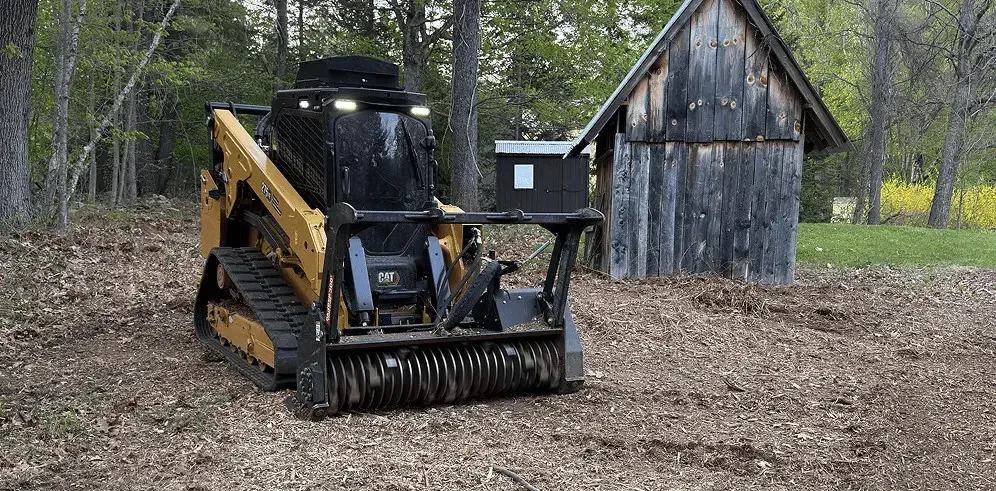
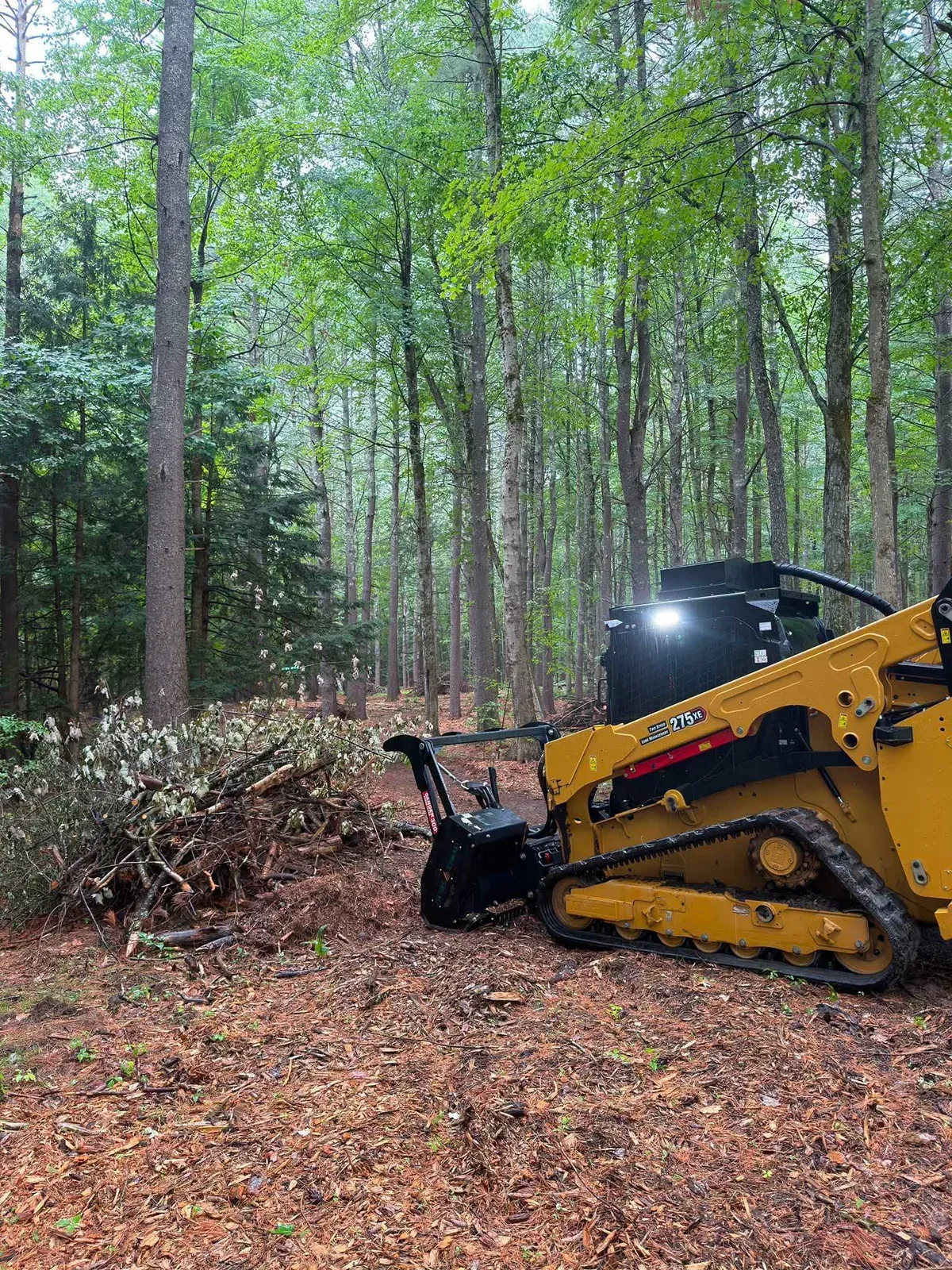
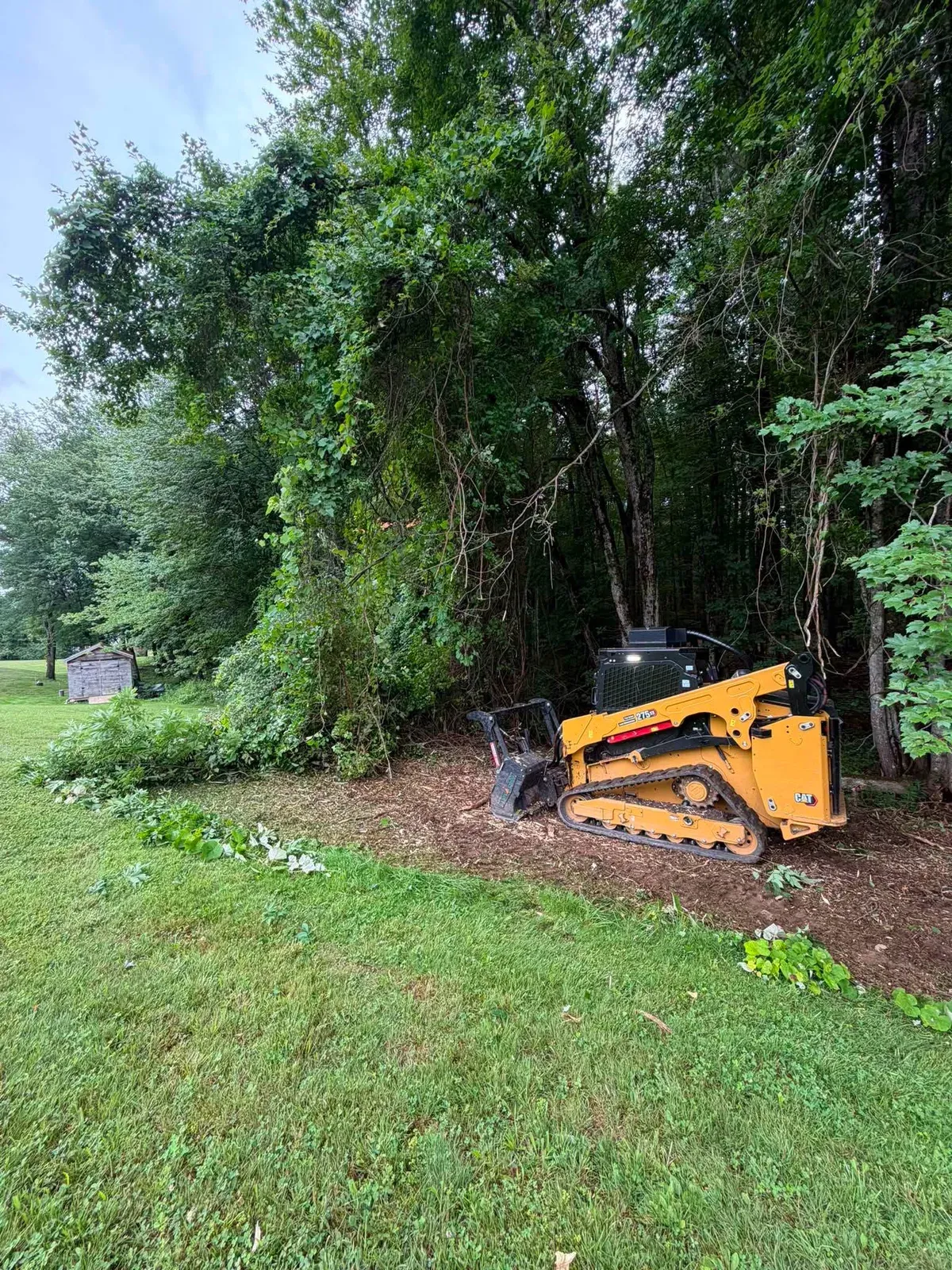
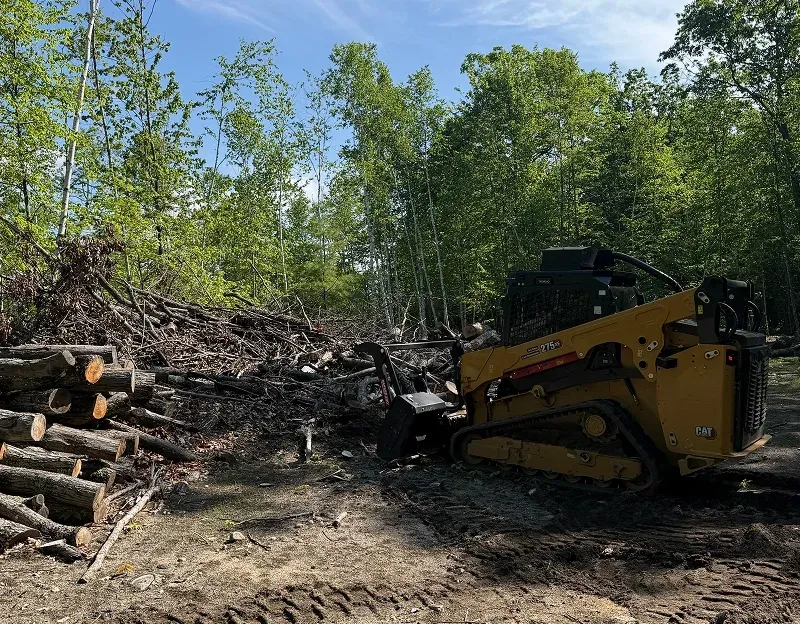
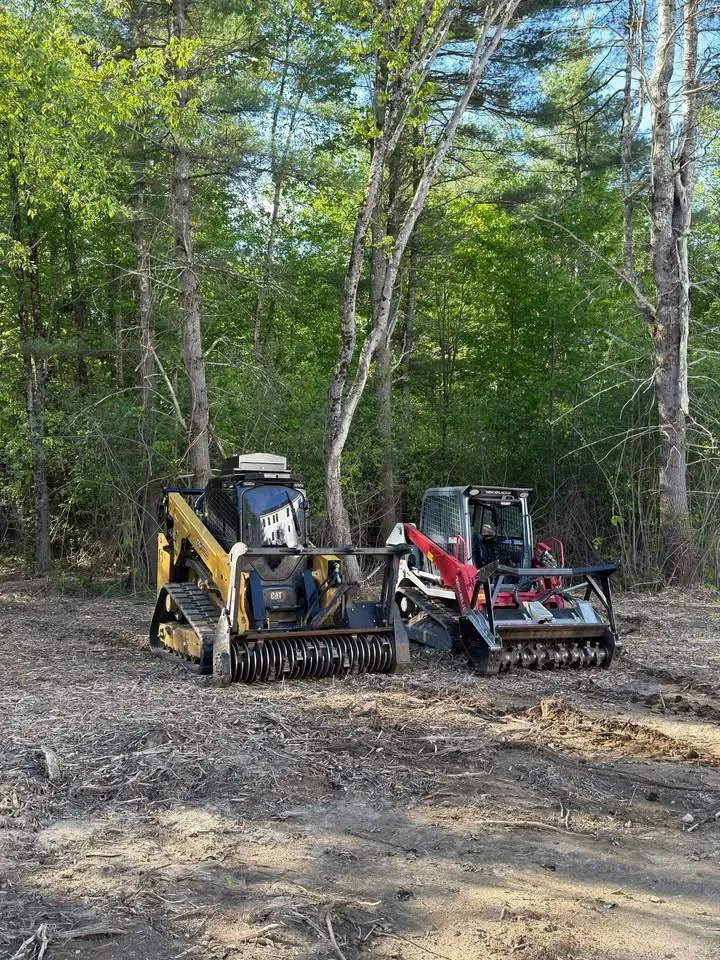
Forestry mulching grinds standing brush and small trees into a mulch layer in one pass. In Concord we use track loaders with forestry mulcher heads for landowners reclaiming fields and woods roads, homeowners pushing back an overgrown lot line, and builders who need to see a site before design. Nothing has to be piled, burned or hauled.
Call (603) 438-6492 or use Get a Quote with photos and the size of the area. More on our forestry mulching page.
Size limit: We can mulch hardwood up to 8 inches in diameter. Larger trees are cut first and the stumps ground separately.
Mulching keeps soil covered and roots in place, which suits Concord's sandy ground, river corridors and hillsides.
Larger parcels in the outer parts of the city can include old fields and woods roads that fill in with saplings. A mulcher reopens them and leaves a surface you can walk, mow or seed.
On sandy soils like those of Concord Heights, mulching cuts brush without stripping the ground, and the mulch layer helps keep sand from washing or blowing away.
Penacook Lake, the city's main water source, and the Merrimack and Contoocook all have protected shoreland. The first 50 feet from the water keeps its natural ground cover, so mulching stops short of it.
Glossy buckthorn, Oriental bittersweet and multiflora rose are on New Hampshire's prohibited invasive plant list. Mulching in place avoids moving living plant parts, but these shrubs resprout and need follow-up.
On wooded slopes such as those near Oak Hill, leaving the root mat in place holds the soil far better than pulling stumps. Very steep pitches still limit where a track machine can work safely.
Shoreland. Within 50 feet of a protected waterbody, natural ground cover stays intact except for a 6-foot-wide path, shrubs can be trimmed to no less than 3 feet, and stumps and roots stay in the ground. Between 50 and 150 feet, at least 25 percent of the area must stay natural woodland (NHDES summary (opens in a new tab); RSA 483-B:9 (opens in a new tab)). The Merrimack through Concord and the lower Contoocook are designated rivers (RSA 483:15 (opens in a new tab)).
City wetland buffer. Concord's zoning sets wetland buffers of at least 50 feet, where removal of vegetation generally requires a Planning Board conditional use permit (City of Concord Zoning Ordinance, Section 28-4-3 (opens in a new tab)).
Slopes. Work on slopes of 25 percent or steeper within 50 feet of surface water, or large projects, can require an NHDES Alteration of Terrain permit (NHDES (opens in a new tab)).
Invasive plants. New Hampshire prohibits moving or transplanting living parts of listed invasive species (Agr 3800 (opens in a new tab)).
This is general guidance, not legal advice. We help you spot when a permit question exists so you can confirm it with the town or NHDES before work starts.
Sources: NHDES: Shoreland Water Quality Protection Act, summary of minimum standards; NH RSA 483-B:9, shoreland minimum standards; NH RSA 483:15, designated rivers; City of Concord: Zoning Ordinance Section 28-4-3, wetland buffers (2025 amendment text); NHDES: Alteration of Terrain permitting; NH Administrative Rules Agr 3800, invasive species
We quote forestry mulching per site rather than publishing set prices. For planning, HomeGuide reports forestry mulching at about $125 to $300 per hour, $1,000 to $2,500 per day, or $400 to $800 per acre on average (HomeGuide (opens in a new tab)). These are national reference ranges, not our prices. Dense invasive brush, slopes and buffer areas in Concord can move a job well beyond the low end.
Our forestry mulching cost calculator gives a quick planning number. For an exact price, call (603) 438-6492 or request a quote with photos.
Try the forestry mulching cost calculator
Cost references: HomeGuide: Forestry Mulching Cost
A few places locals know, and what they mean for outdoor work nearby.
The largest lake in Concord and the city's main water source, in the western part of the city. Land within 250 feet of its shore is protected shoreland under state law.
Get directions to Penacook Lake (opens Google Maps in a new tab)A flat, sandy plain on a 100-foot bluff east of the Merrimack, where most of the city's commercial development since 1960 has gone. Sandy ground drains fast but erodes easily once vegetation and roots are stripped.
Get directions to Concord Heights (opens Google Maps in a new tab)Concord's highest ground, 860 feet above sea level, just west of the summit in neighboring Loudon. Wooded hillside lots in this area need planning for slopes and equipment access.
Get directions to Oak Hill (opens Google Maps in a new tab)The Contoocook joins the Merrimack at the village of Penacook. Its last stretch, from the Riverhill bridge to the Merrimack, is a state-designated river, so riverside lots fall under shoreland rules.
Get directions to Contoocook River at Penacook (opens Google Maps in a new tab)Photos from our crew's jobs across New Hampshire and Massachusetts.
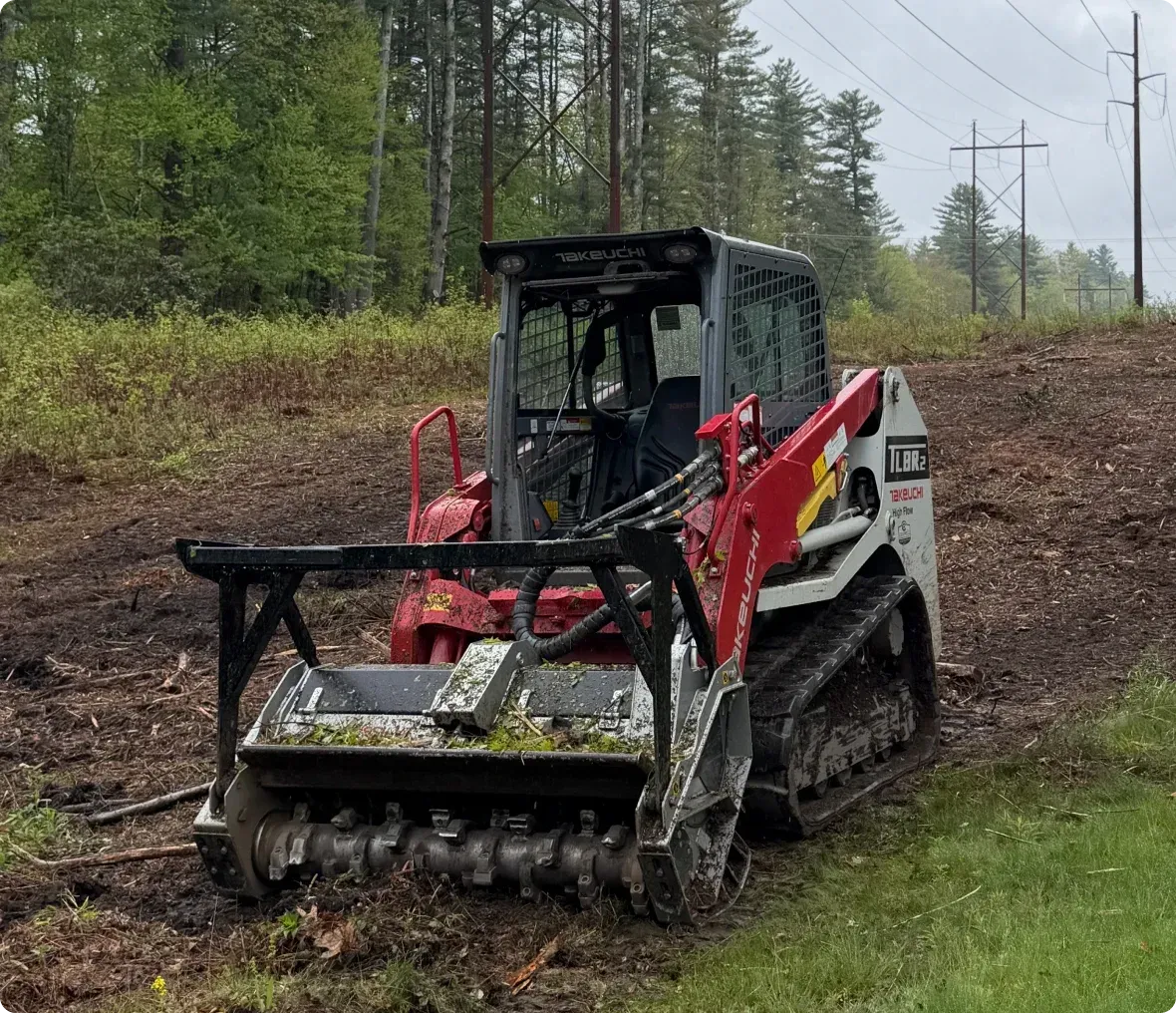
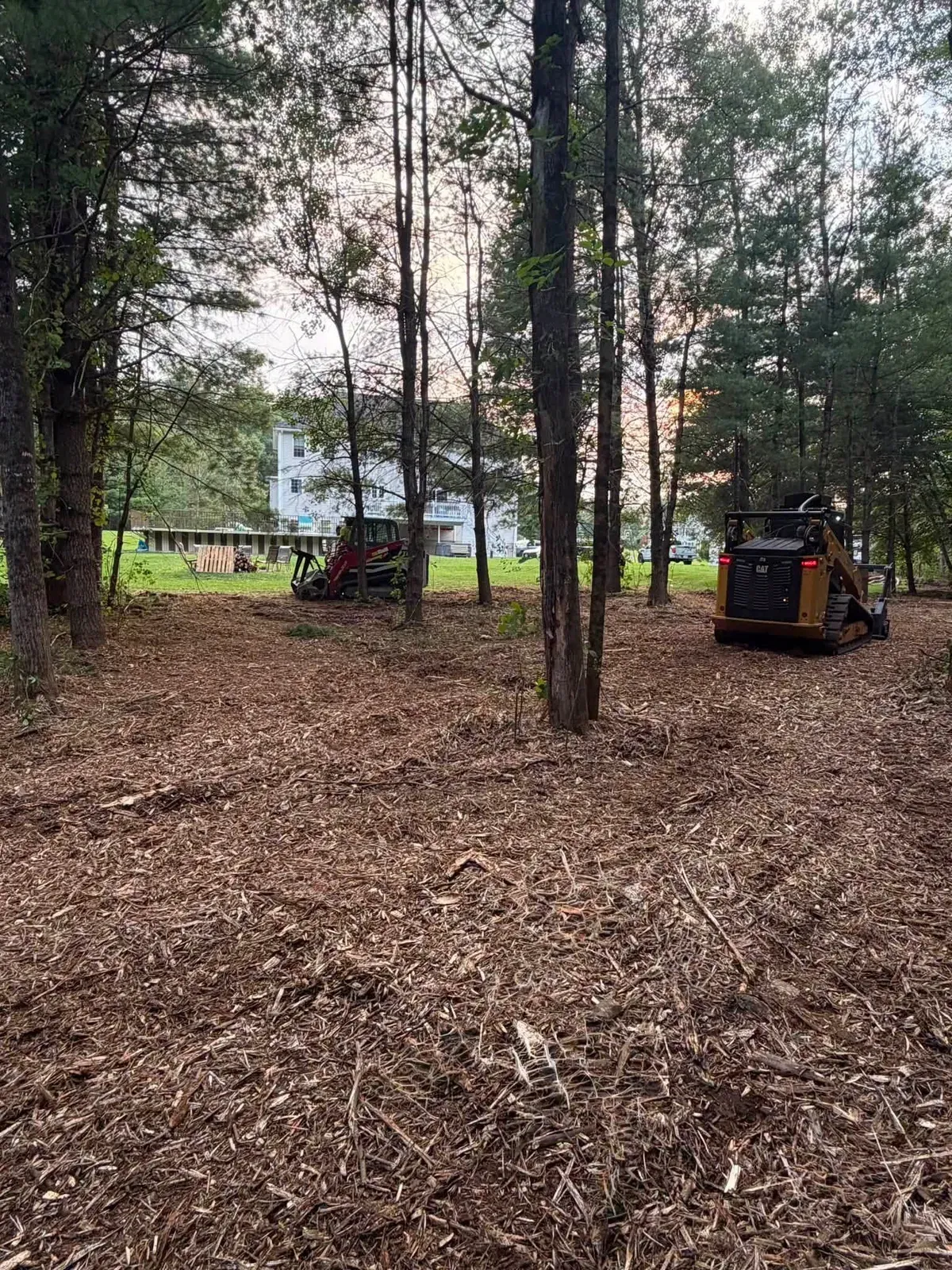
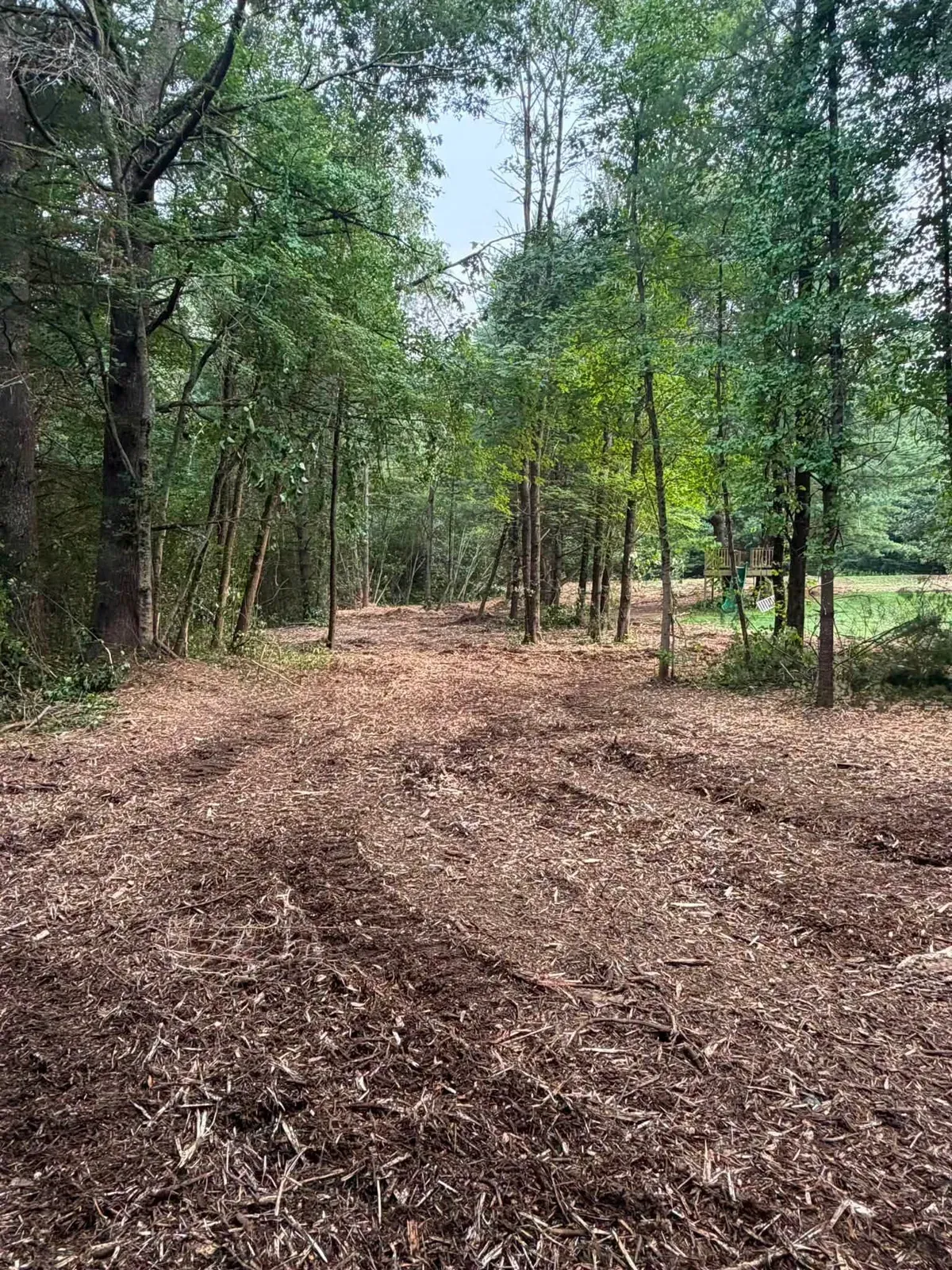
Yes. A forestry mulcher grinds saplings and brush into mulch and leaves the field ready to mow or seed once it settles. Fields that have grown in for years may have larger stems that take more time.
Only outside the protected areas. The first 50 feet from the water keeps its natural ground cover, and work further back has to leave part of the woodland buffer natural. Wetland buffers in the city also restrict vegetation removal.
It helps, because roots stay in the soil and the mulch covers the surface. It is not a substitute for erosion controls on a construction site, but it disturbs far less ground than pulling stumps.
It clears them, but they resprout from roots. Plan on a follow-up mulching pass over the next season or two.
Mulching first lets you and your builder see the land. Stumps can be ground or pulled later where the house and driveway go. See land clearing in Concord.
See every town we cover on our service areas page.
Tell us about the job and we will call you back to talk it through. Fields marked * are required.