
How long does it take to grind a 30 inch stump?
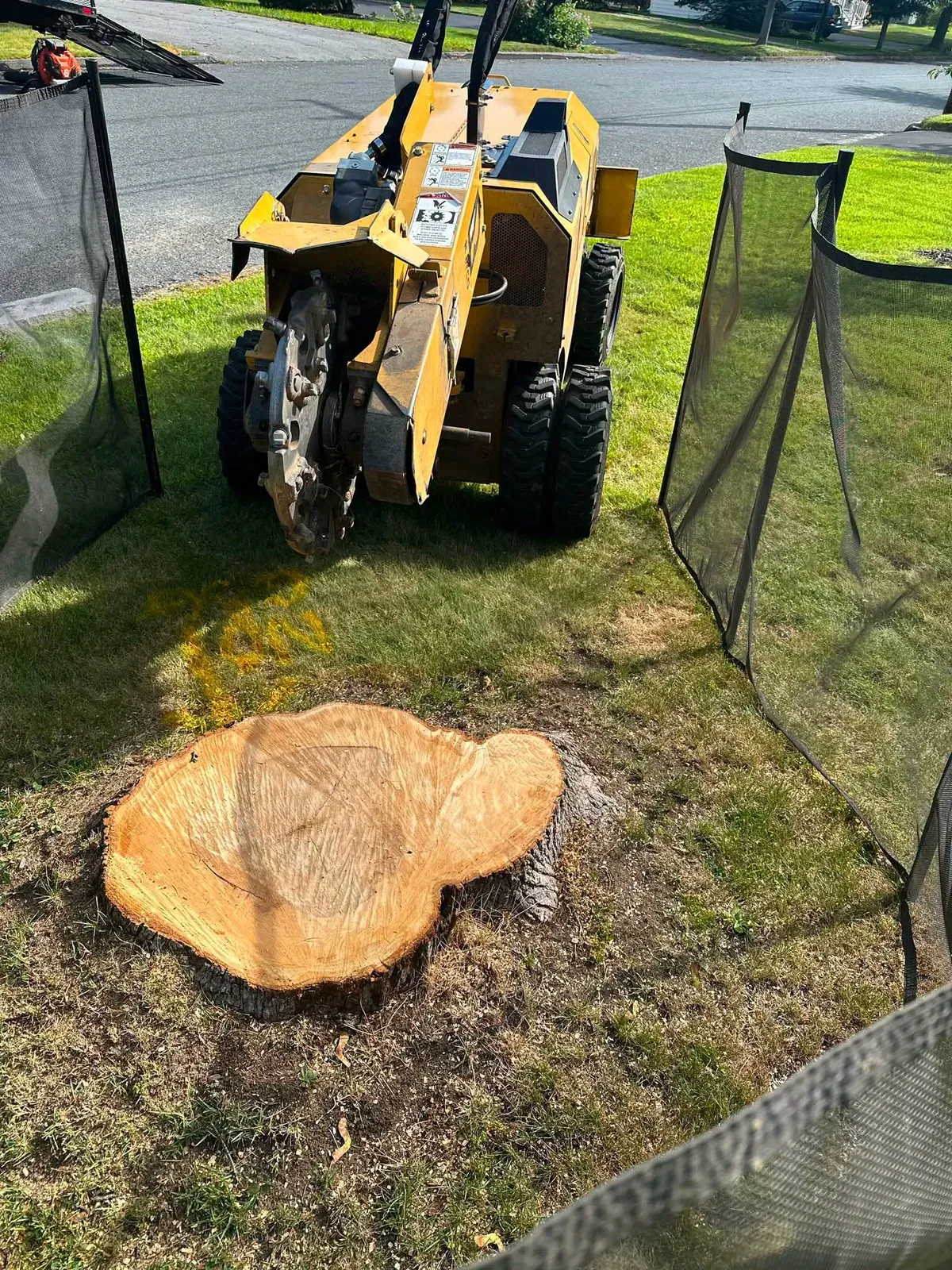
There is no single number, but published guides give a useful frame. HomeGuide reports that grinding a stump takes 15 minutes to 3 hours, and HomeAdvisor says one to two hours depending on stump size. A 30-inch stump is bigger than most yard stumps, so it sits toward the long end of those ranges, and you should add time for setup and cleanup on top of the grinding itself.
The machine, the wood and what is buried around the stump decide where in that range your stump lands.
What the published guides say
The guides measure different things, so it helps to see them together.
| Source | Stump size | Reported grinding time |
|---|---|---|
| HomeGuide | Any size | 15 minutes to 3 hours |
| HomeGuide | 3 to 15 inches, young trees | Quickest end of the range |
| Fixr | 20 inches | 15 minutes to 2 hours |
| HomeAdvisor | Varies by size | 1 to 2 hours |
HomeGuide also notes that older, larger hardwood trees take the most time. A 30-inch stump is 50% wider than the 20-inch example Fixr uses, and the face of the stump has more than twice the area. Grinding time grows with that volume of wood, not just with the diameter.
These are national reference figures. They are not a promise of how long your job will take.
Why a 30-inch stump takes longer
A stump grinder does not remove a stump in one bite. Vermeer’s operating guide for its SC30TX stump cutter lays out the process:
- Position the cutter wheel at the top edge of the stump.
- Make a light pass across the stump.
- Lower the wheel and make deeper passes, sweeping side to side.
- Stop at the required depth or at half the cutter wheel’s diameter, whichever comes first.
- Move the machine farther into the stump and repeat.
- Stop and clear chips when they pile up and get in the way.
On a 30-inch stump, the operator repeats that cycle across a wide face of wood, then again below grade. The guide also warns never to undercut a stump, because it can cause violent kickback. So the work has to go in controlled passes. You cannot rush a big stump.
The five things that set the clock
1. Grinder size and horsepower
Stump grinders range from compact walk-behind units to large tracked and towable machines. Vermeer’s stump cutter lineup includes models such as the 40-hp SC402 and the SC1052, which Vermeer describes as built to tackle oversized stumps with fewer moves. More power and a bigger wheel take larger bites per pass. A small machine can still grind a 30-inch stump. It just needs more passes.
The trade-off is access. The largest machines will not fit through a 36-inch backyard gate. Sometimes the fastest option is a smaller grinder that can reach the stump at all.
2. Wood species
Vermeer’s guide states that the size and speed of each cut depends on the hardness of the wood. Oak, maple and hickory grind slower than white pine or spruce. A 30-inch red oak stump will usually take longer than a 30-inch white pine stump on the same machine.
3. Roots and root flare
A 30-inch measurement at ground level often includes a wide root flare. Large surface roots running across the lawn add more grinding if you want them gone too. Grinding only the stump is faster than grinding the stump plus the main surface roots.
4. Rocks, wire and buried debris
Vermeer’s guide tells operators to remove loose chunks of wood, stones, wire and other debris from the stump and work area before grinding, because the wheel can throw objects. Every rock found mid-grind means stopping, digging it out and checking the teeth. Old trees often grew around fence wire, stones or old nails. Much of New Hampshire sits on glacial till with numerous surface stones, so rocks around the root zone are common, and they slow the job more than almost anything else.
5. Access and position
A stump beside the driveway on flat ground is the easy case. A stump on a slope, tight against a foundation, wedged between a fence and a shed, or down a long path across a yard takes longer to reach and set up. Vermeer’s guide warns about rollover risk on side hills, so slope work goes slower by design.
Setup and cleanup add time
The grinding clock is only part of the visit. For a 30-inch stump, the full job usually looks like this:
- Walk the site. Check marked utility lines, sprinkler heads, pet fences and anything near the stump.
- Clear the area. Pull loose rocks, wire and debris away from the stump.
- Set up safety screens. Debris screens protect windows, cars and siding from flying chips.
- Grind. Controlled passes across the face, then down below grade.
- Clean up. Rake chips back into the hole, pile them for your use or load them for hauling.
A 30-inch stump produces a big pile of chips. Hauling them away takes longer than raking them into the hole. Decide ahead of time which you prefer.
The step that happens before the grinder arrives
New Hampshire’s damage prevention law defines excavation to include “tree and root removal” (RSA 374:48). Work within 100 feet of an underground facility needs notice to Dig Safe at least 72 hours ahead, not counting Saturdays, Sundays and legal holidays (RSA 374:51). Vermeer’s operating guide also lists contacting the local one-call system as the first setup step.
That marking window does not change the grinding time. It does change when grinding can start, so plan for it.
What this means for the cost of a 30-inch stump
Time and cost move together. Using our stump grinding cost calculator, a single 30-inch hardwood stump with easy access comes to $150 (30 x $5 per inch) at our calculator’s reference rates. With difficult access, the same stump comes to $225. These are planning figures from the calculator, not a quote. For national ranges, see our post on the average price to grind a tree stump.
How to speed up your job
You can shave time off the visit before we arrive:
- Measure the stump at ground level and send a photo.
- Clear toys, furniture, firewood and loose stones from around the stump.
- Mark private lines that Dig Safe does not locate, like irrigation, lighting and pet fences.
- Measure the narrowest gate on the way to the stump.
- Tell us where you want the chips.
Get your 30-inch stump ground
We grind large stumps across southern New Hampshire, including Goffstown, Manchester and Bedford. Learn more about our stump grinding service, then call (603) 438-6492 or request a quote with the diameter, wood type if you know it, and a photo of the path to the stump.
Related questions
How long does a typical stump take to grind?
HomeGuide reports 15 minutes to 3 hours per stump, depending on size, wood hardness and location. HomeAdvisor says one to two hours depending on stump size. A 30-inch stump is larger than most residential stumps, so it falls toward the longer end of those ranges.
Does an oak stump take longer than a pine stump?
Yes. Vermeer's operating guide notes that the size and speed of each cut depends on the hardness of the wood. Dense hardwoods like oak and maple take more passes than pine or spruce of the same diameter.
Do I need to be home while you grind?
Usually not, as long as we can reach the stump and you have told us about gates, pets, irrigation lines or pet fences. We do need clear access and agreement on what to do with the chips.
Why can't the work start the day I call?
New Hampshire law treats tree and root removal as excavation. Work within 100 feet of an underground facility needs Dig Safe notice at least 72 hours ahead, not counting weekends and legal holidays. That marking window comes before any grinding below grade.
Sources
- HomeGuide: Stump Grinding Cost (How long does it take to grind a stump?)
- HomeAdvisor: How Much Does It Cost to Remove a Tree Stump?
- Fixr: Stump Grinding Cost
- Vermeer: SC30TX Stump Cutter Rental Center Guide, Operating Steps and Safety Practices
- Vermeer: Stump Grinders (stump cutter lineup)
- NH RSA 374:48, Definitions (excavation includes tree and root removal)
- NH RSA 374:51, Excavation notice requirements
- UNH Cooperative Extension: Why Trees Grow Where They Do (New Hampshire soils)