
Small lots with no room for debris
Most Manchester lots are compact, so cut trees, brush and stumps have to be loaded and hauled rather than piled on site. Grapple work and trailer access from the street matter more here than on rural land.
Overgrown city lots, backyard additions and commercial edges cleared where space is tight and neighbors are close.
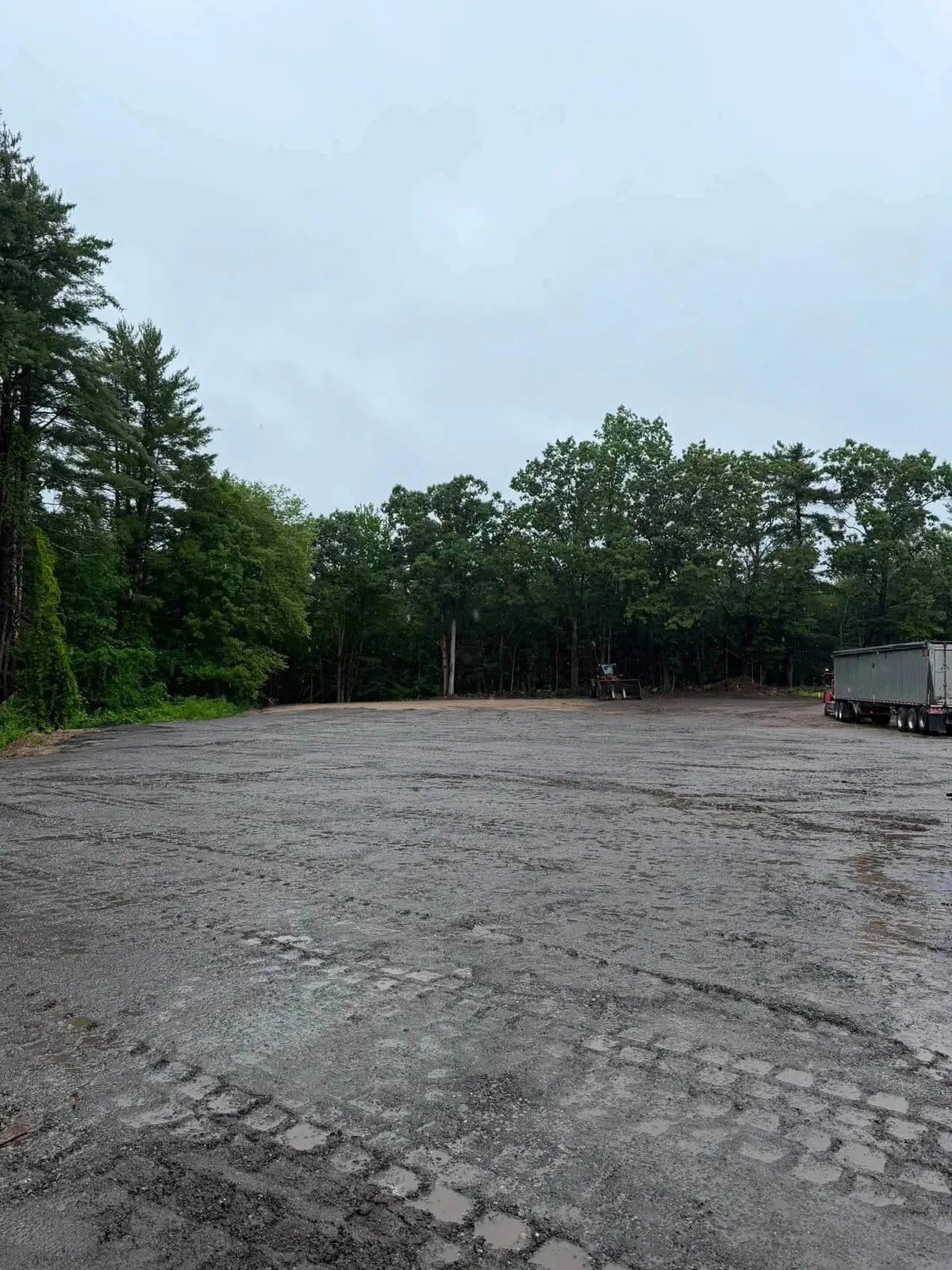
We clear land in Manchester for homeowners making room for an addition, garage or driveway, builders preparing infill and subdivision lots, and commercial owners clearing overgrown edges around parking areas and buildings. Our mini excavator, track loaders, grapple and stump grinders let us work on small sites, and our trucks and trailers haul debris off lots that have no room to keep it.
Call (603) 438-6492 or use Get a Quote with the address and a description of the area. We are based next door in Goffstown. More on our land clearing page.
Clearing in a city means working around what is already there. These local factors usually set the scope and the cost.
Most Manchester lots are compact, so cut trees, brush and stumps have to be loaded and hauled rather than piled on site. Grapple work and trailer access from the street matter more here than on rural land.
Overgrown parcels between existing buildings can hide old foundations, fill and debris under the brush. A mini excavator lets us sort and remove what turns up while keeping clear of neighboring fences, walls and driveways.
Low ground along Cohas Brook and other drainage corridors can include wetlands. Excavating, removing or filling in a bank, marsh or swamp requires a state permit, so a wetland check comes before clearing.
Projects within 250 feet of Lake Massabesic, the Merrimack or the Piscataquog can fall in protected shoreland, where part of the 50 to 150 foot woodland buffer must stay natural and the state terrain permit threshold drops to 50,000 square feet.
Alteration of Terrain. NHDES requires an Alteration of Terrain permit when a project disturbs more than 100,000 square feet, or 50,000 square feet if any disturbance is within protected shoreland, or when it disturbs a 25 percent or steeper slope within 50 feet of surface water (NHDES (opens in a new tab); RSA 485-A:17 (opens in a new tab)).
Wetlands. Excavating, removing or filling in a bank, marsh, swamp or surface water requires a state wetlands permit (RSA 482-A:3 (opens in a new tab)).
Shoreland. Within the protected shoreland, at least 25 percent of the area between 50 and 150 feet from the water must stay natural woodland, and stumps within 50 feet stay in the ground (RSA 483-B:9 (opens in a new tab); NHDES summary (opens in a new tab)).
Utilities. Pulling or grinding stumps counts as excavation, so a Dig Safe notice is required at least 72 hours ahead, not counting weekends and legal holidays (RSA 374:48 (opens in a new tab); RSA 374:51 (opens in a new tab)).
City review. If the clearing is part of a new building, addition or subdivision, ask the City of Manchester's planning and building staff what approvals the project needs before clearing starts.
This is general guidance, not legal advice. We help you spot when a permit question exists so you can confirm it with the town or NHDES before work starts.
Sources: NHDES: Alteration of Terrain permitting; NH RSA 485-A:17, terrain alteration; NH RSA 482-A:3, wetlands permit requirement; NH RSA 483-B:9, shoreland minimum standards; NHDES: Shoreland Water Quality Protection Act, summary of minimum standards; NH RSA 374:48, definitions (excavation includes tree and root removal); NH RSA 374:51, notice before excavation
Land clearing is quoted per site, so we don't publish set prices. For planning, HomeGuide puts land clearing at about $1,200 to $2,500 per acre for light clearing of brush and small trees and $4,500 to $8,000 per acre for heavy clearing of dense woods with large trees (HomeGuide (opens in a new tab)). Angi reports a typical range of roughly $1,397 to $6,176 per acre (Angi (opens in a new tab)). These are national reference ranges, not our prices, and stump removal, hauling and grading in Manchester can add to them.
If your project is mostly brush and small trees that can be mulched in place, our forestry mulching cost calculator gives a planning estimate. For everything else, call (603) 438-6492 or request a quote.
Cost references: HomeGuide: Land Clearing Cost; Angi: How Much Does It Cost to Clear Land?
A few places locals know, and what they mean for outdoor work nearby.
A lake of more than 2,500 acres in Manchester and Auburn that has supplied the city's drinking water since 1874. State shoreland rules and Manchester Water Works' focus on protecting water quality at the source make work near its shore a careful job.
Get directions to Lake Massabesic (opens Google Maps in a new tab)Flows from Goffstown through Manchester's West Side to the Merrimack at Bass Island. The lower river is a state-designated river, so lots near its banks fall under shoreland rules.
Get directions to Piscataquog River (opens Google Maps in a new tab)A Merrimack River tributary that drains part of the city. Low ground along brooks like this can include wetlands, where excavating or filling needs a state permit.
Get directions to Cohas Brook (opens Google Maps in a new tab)The highest point in Manchester at 570 feet. Hillside streets mean sloped yards where grinder and loader placement takes extra planning.
Get directions to Wellington Hill (opens Google Maps in a new tab)Photos from our crew's jobs across New Hampshire and Massachusetts.
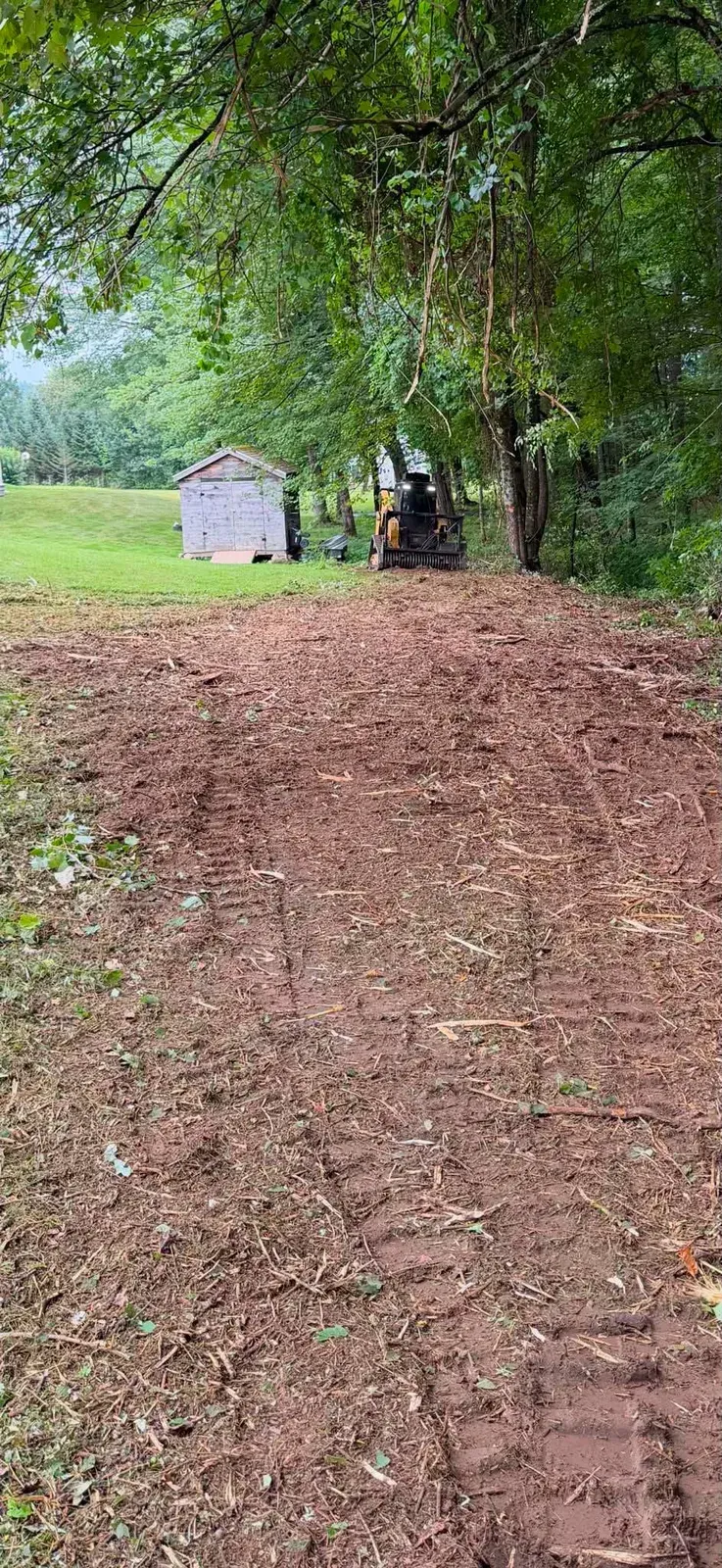
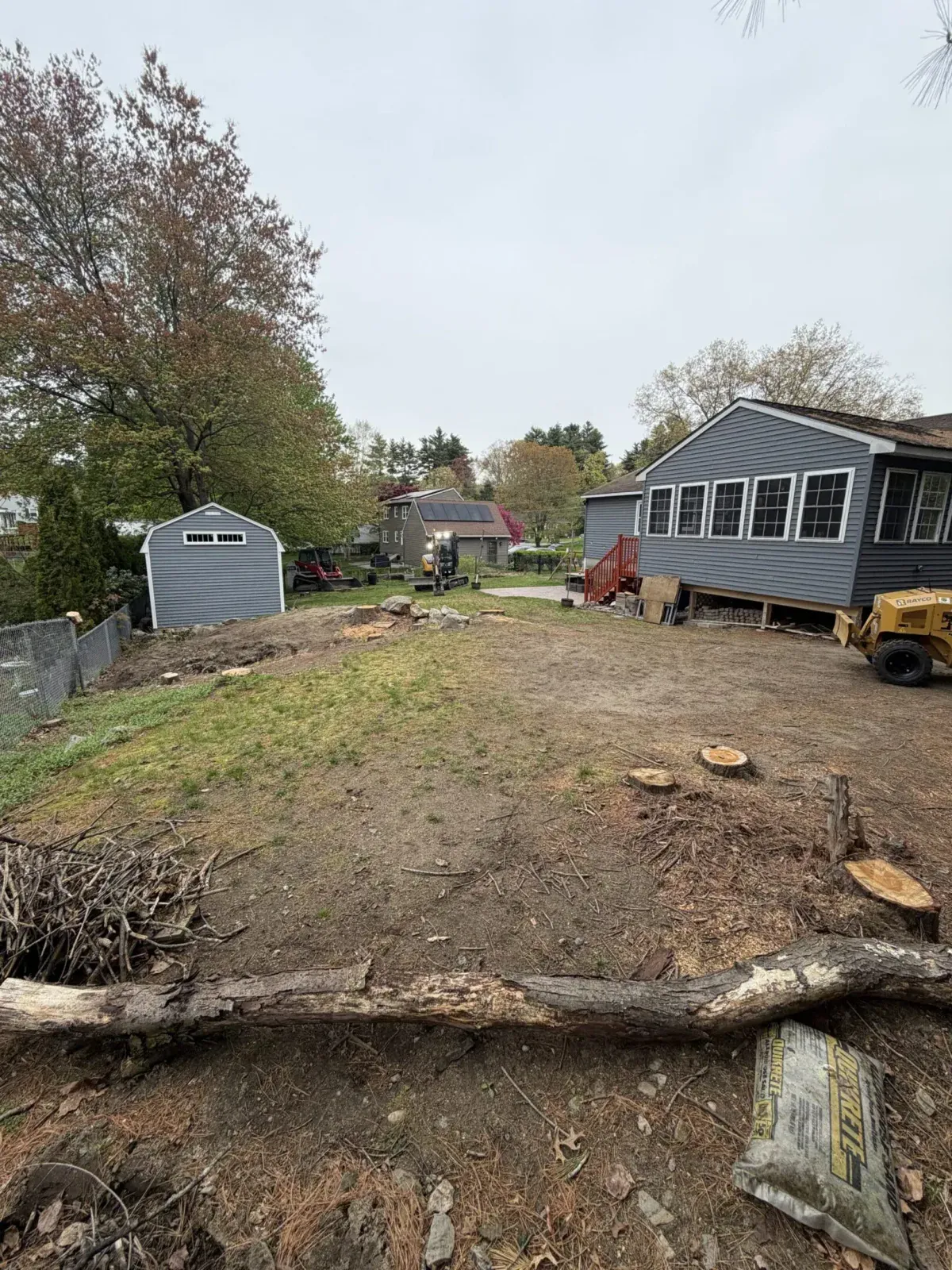
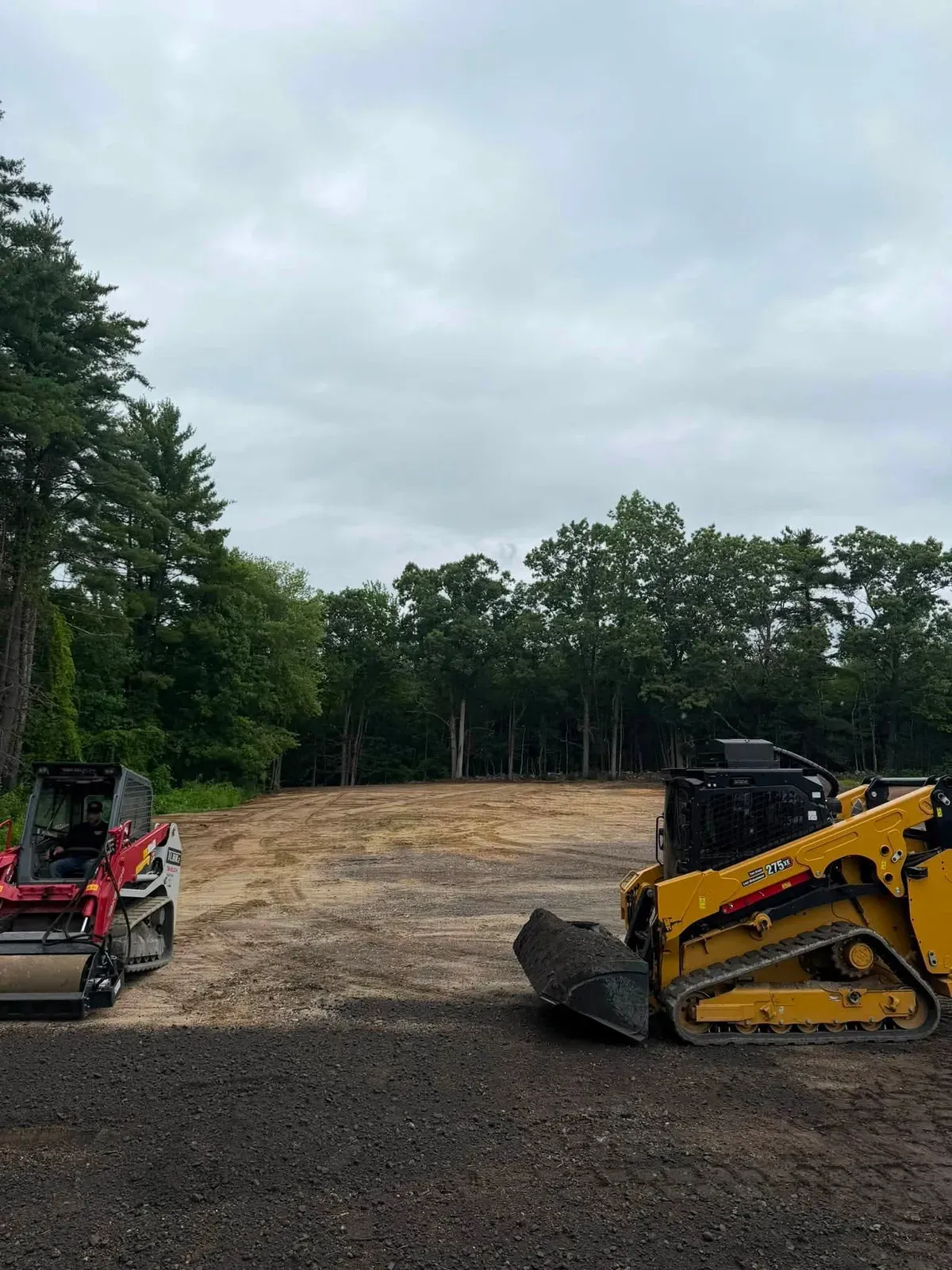
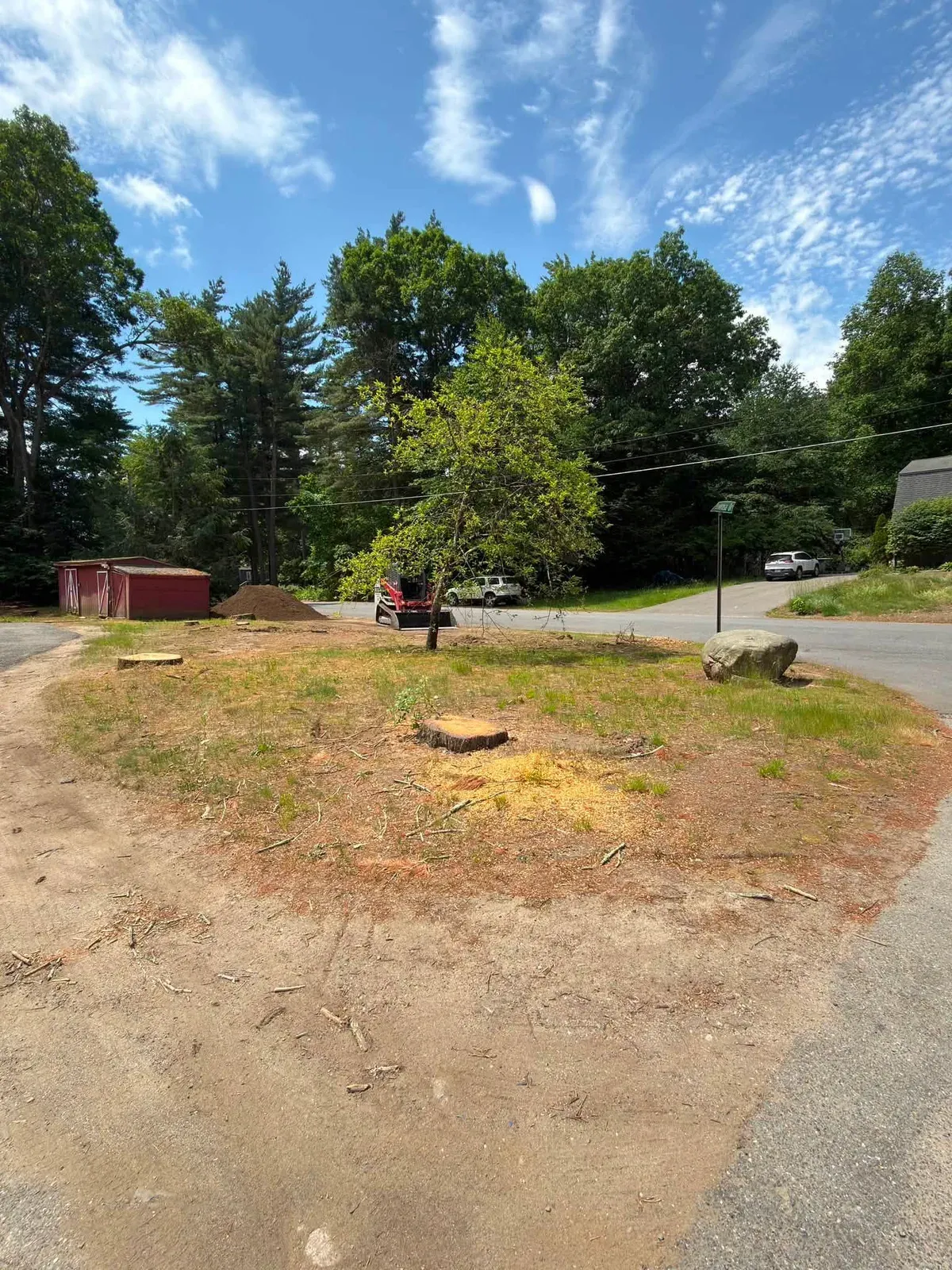
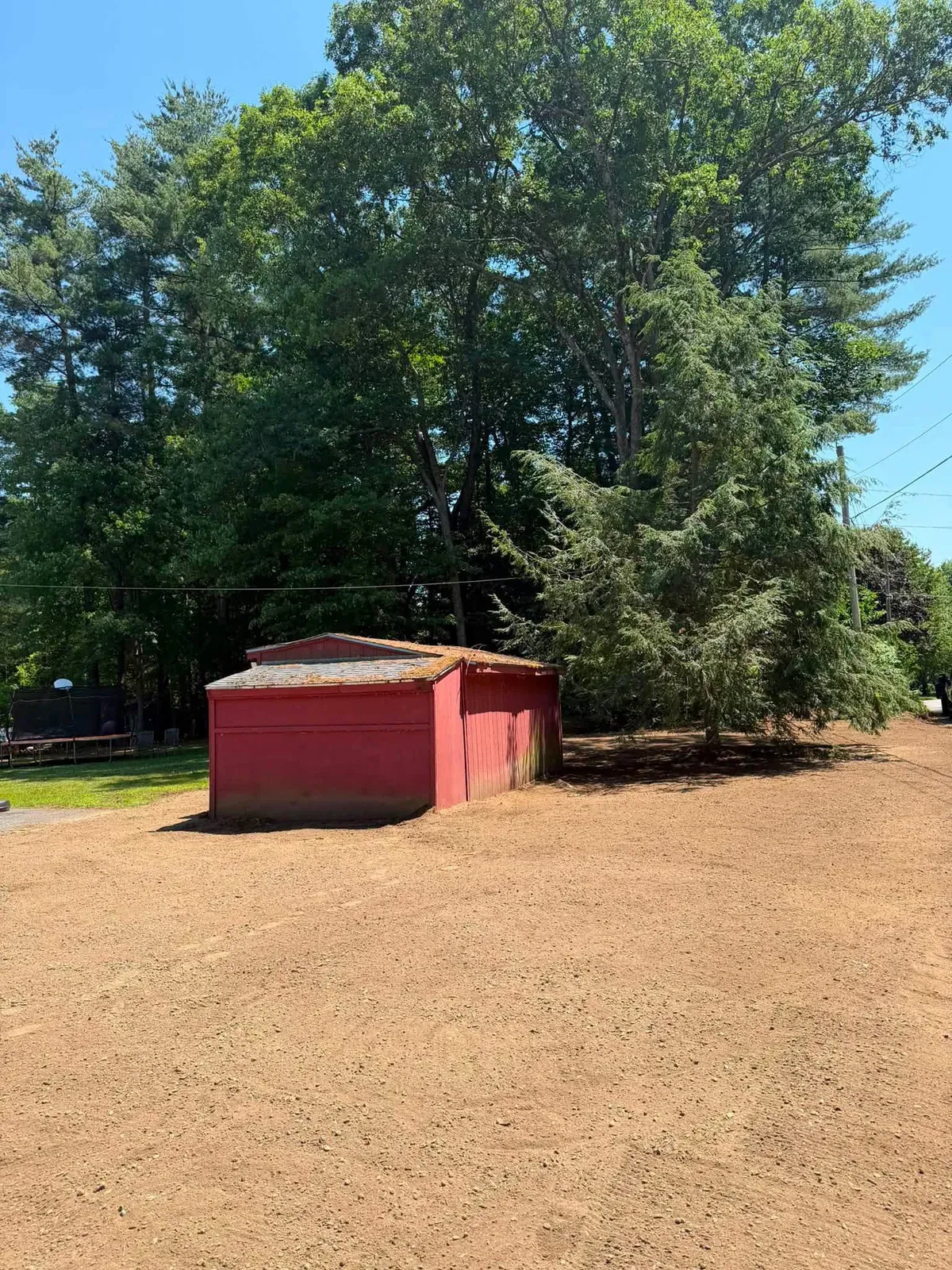
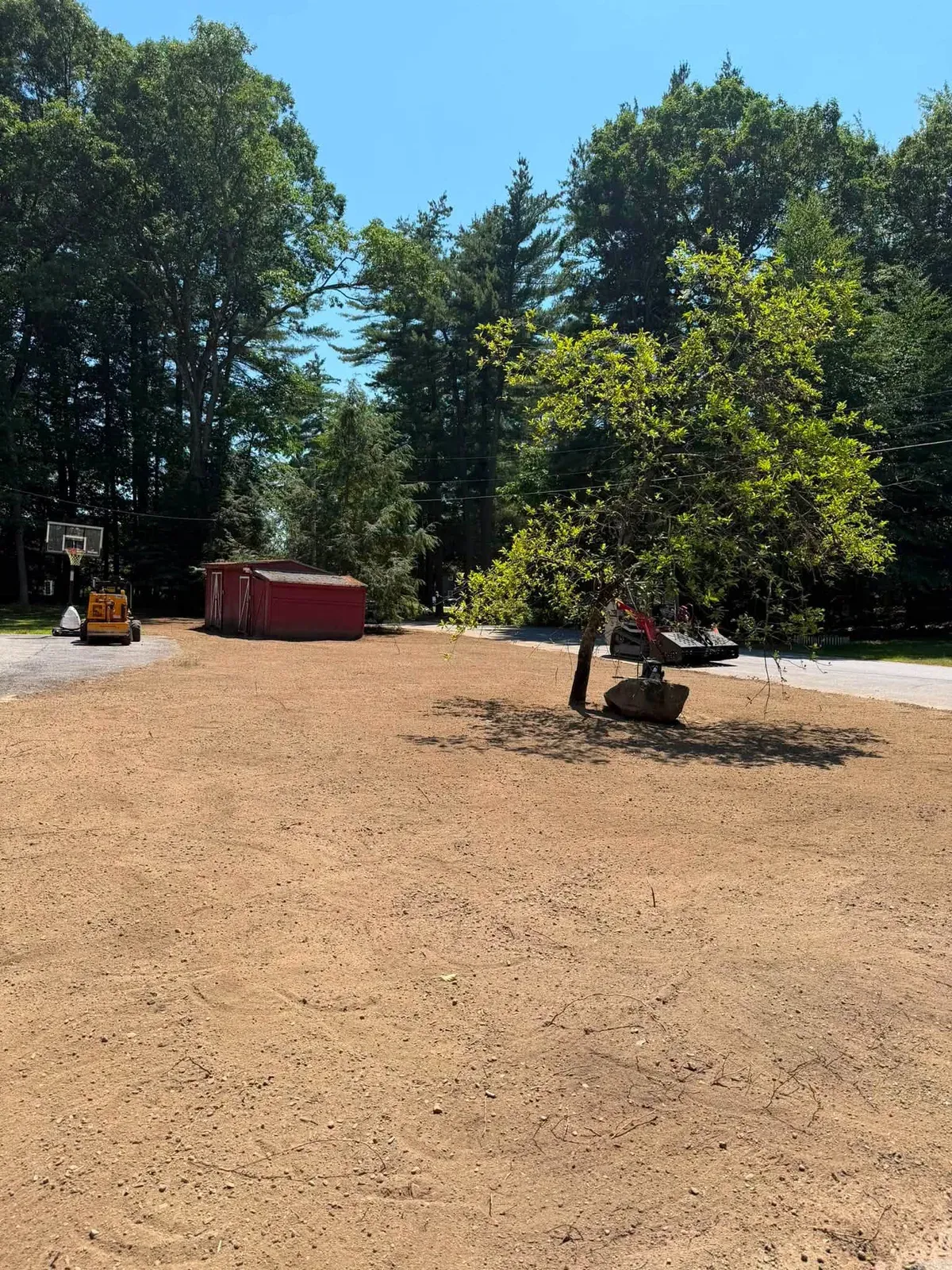
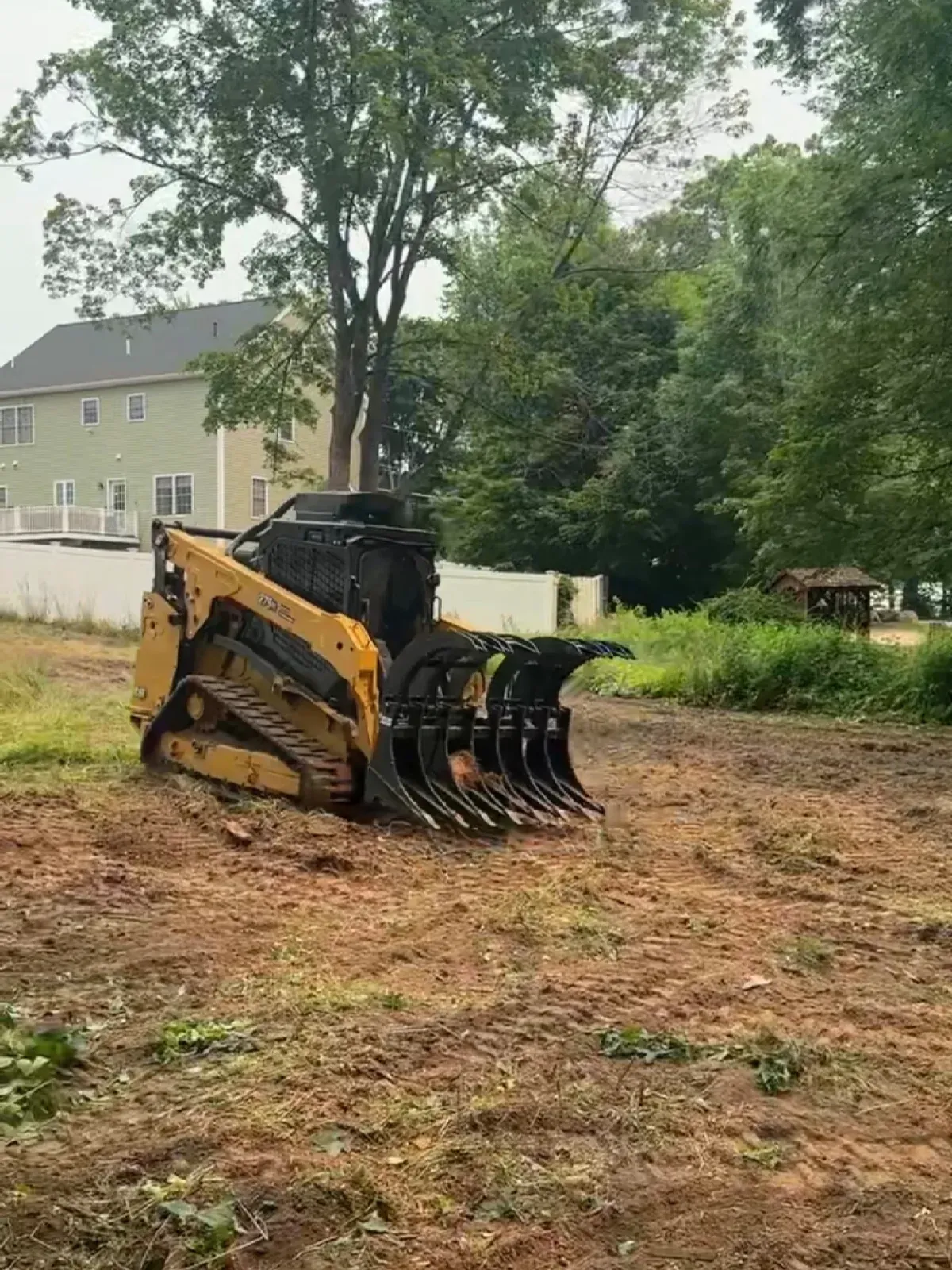
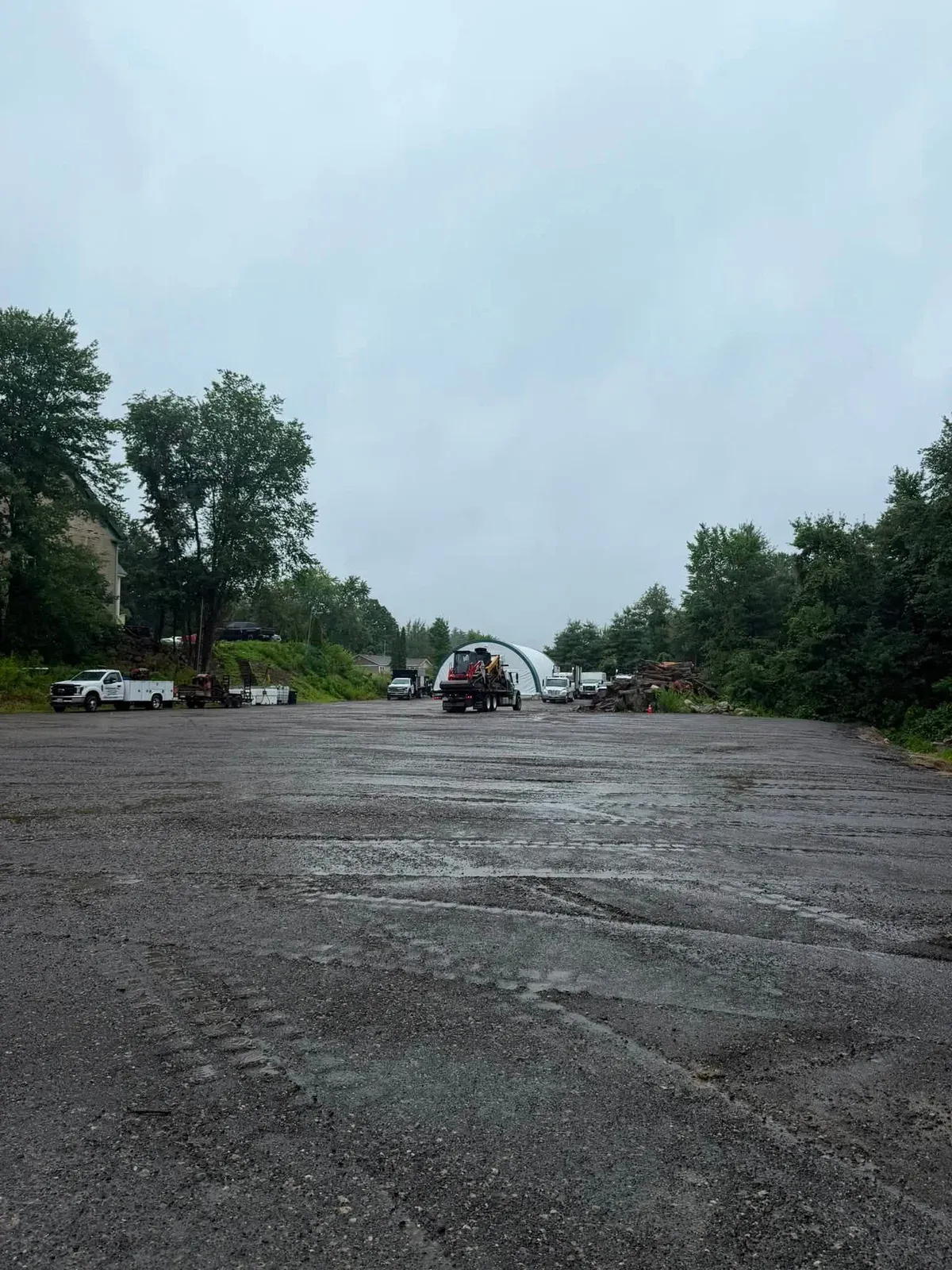
Yes. A mini excavator, track loaders and a grapple let us work on tight parcels, and our trucks and trailers haul the debris away. Send photos and the street access so we can plan where equipment will sit.
Small residential clearing often needs no state permit, but projects over 100,000 square feet, or 50,000 square feet near protected shoreland, need an Alteration of Terrain permit. Work in a wetland needs a state wetlands permit. If you are building, check with the city about site approvals.
On most city lots, yes, because there is no room to leave brush piles. Where there is space and it makes sense, brush can be mulched in place instead, which cuts down on hauling.
Yes. We clear overgrown edges and brush around commercial properties and grind stumps so the area can be mowed or paved. Work near buildings and traffic gets debris screens and a planned equipment layout.
Yes. We clear trees and brush, remove stumps where the foundation and driveway will go, and can rough grade the area with track loaders and the mini excavator. Your builder sets the final layout.
See every town we cover on our service areas page.
Tell us about the job and we will call you back to talk it through. Fields marked * are required.